The 2026 Asian Universities Alliance–Future Power and Energy Systems (FPES) International Summer School, hosted by the Department of Electrical Engineering at Tsinghua University, concluded successfully at the West Main Building on the morning of August 20. Over the course of two weeks, 35 participants from 25 universities in 21 countries took part in cutting-edge courses, technical visits, cultural activities, and academic exchanges. From August 21 to 22, the participants traveled to Zhangbei, Zhangjiakou, Hebei Province, for field study of the region's renewable energy industry, bringing the summer school to a successful close.
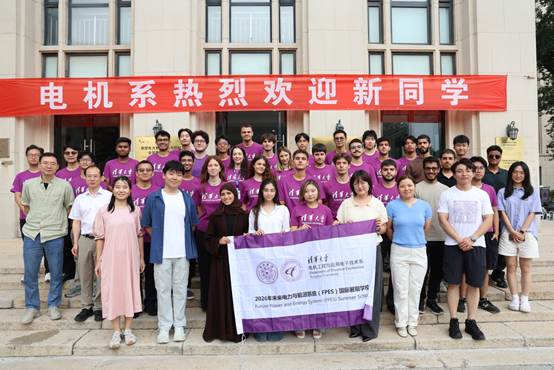
[Photo: Group photo at the closing ceremony]
Before the closing ceremony, the participants gave group presentations on the transformation of power systems in their respective countries or regions. The presentations examined power system transformation from perspectives including changes in the power generation mix, energy storage applications, and future grid operation, highlighting the diversity of power and energy transition pathways through case studies from different countries and regions. The presentations also served as an opportunity to assess what the participants had learned during the summer school and strengthen their collaboration and communication skills.
The closing ceremony was hosted by Zhang Pengcheng, a faculty member of the Department of Electrical Engineering. Professor Sun Kai, Deputy Head of the Department of Electrical Engineering, delivered the opening remarks. He noted that the development of future power and energy systems is an important challenge shared by countries around the world, and expressed the hope that the participants would carry the knowledge, insights, and friendships gained during the summer school into their future studies and careers. The Department of Electrical Engineering at Tsinghua University also looks forward to staying connected with the participants and welcomes them back to Tsinghua in the future for further study, research, and academic exchange.
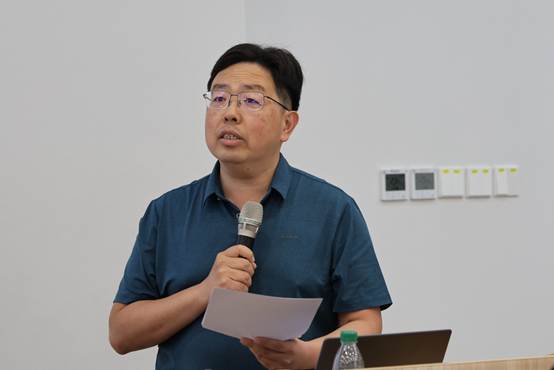
[Photo: Sun Kai delivers remarks]
Professor Hu Zechun, Director of the summer school, then reviewed and summarized the two-week program. He looked back on the participants' shared experiences in classroom learning, technical visits, and cultural activities, and spoke highly of the research and presentations prepared by the groups on power system transformation in different countries and regions. He noted that countries differ in their stages of energy development and technological pathways, but also face common challenges, including the development of renewable energy, further electrification, and the deployment of energy storage. Professor Hu also expressed his appreciation to the faculty, staff, and teaching assistants for their contributions to the summer school and wished all the participants success in their future studies, while welcoming them to return to China in the future for travel, study, or work.
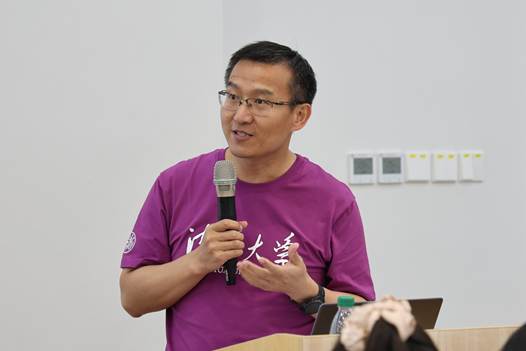
[Photo: Hu Zechun reviews the summer school]
Four participants—Anran Kang from Canada, Daphne Bertaiola from Italy, Dinh Phong Nguyen from Vietnam, and Ahmed Nabil Abubakr Batheeb from Yemen—shared their experiences and reflections on the past two weeks.
Anran Kang noted that the extensive opportunities for questions and discussion during the courses helped her connect theoretical concepts with real-world engineering applications. She also said that the laboratory visits, NIO's battery-swapping technology, and 3D printing left a particularly strong impression on her. Daphne Bertaiola spoke about the cultural experiences, from writing her own name in Chinese to trying traditional activities such as guzheng and martial arts. She said that two weeks of learning and living together had brought students from different countries from being strangers to becoming friends.
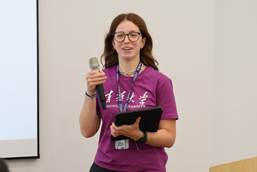
[Photo: Anran Kang and Daphne Bertaiola speak]
Dinh Phong Nguyen said that the summer school brought together theoretical learning, engineering practice, and cultural experiences, helping participants connect classroom knowledge about renewable energy and new power systems with real-world industrial and energy systems. He expressed his hope of returning to China in the future. Drawing on his own academic experience, Ahmed Nabil Abubakr Batheeb said that the summer school introduced him to technologies such as DC power transmission, with which he had previously had limited exposure, while exchanges with students from different countries broadened his understanding of global energy challenges.
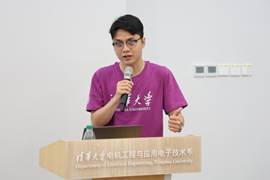
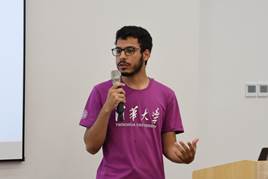
[Photo: Dinh Phong Nguyen and Ahmed Nabil Abubakr Batheeb speak]
At the end of the ceremony, Professor Sun Kai, Professor Hu Zechun, and several faculty members presented certificates of completion to all participants, marking the formal conclusion of the Beijing-based academic program of the summer school.
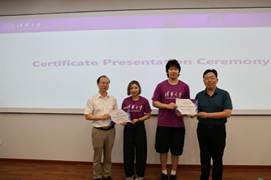
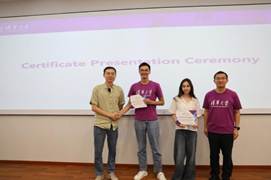
[Photo: Professors Sun Kai and Hu Zechun and other faculty members present certificates of completion to participants]
From the Classroom to the Grasslands: A Field Study in Zhangbei, Zhangjiakou
On August 21, all participants traveled to Zhangbei, Zhangjiakou, for field study focusing on the renewable energy industry and local culture.
The field study group's first stop was the Jingneng Zhangjiakou Green Power Control Center. The project is part of Beijing's renewable energy integrated application demonstration program and received the National Quality Project Gold Award for 2022–2023, making it the first 1-million-kilowatt-scale onshore wind power project in China to receive the honor. With a total installed capacity of 1.15 million kilowatts, the project generates 3.064 billion kWh of green electricity annually and reduces carbon dioxide emissions by 3.05 million tonnes. As an important supporting project for the Beijing 2022 Winter Olympics, it supplied a cumulative 170 million kWh of green electricity to Olympic venues, ensuring that 100% of their electricity consumption was supplied by green power. The project is regarded as a model for coordinated energy development in the Beijing-Tianjin-Hebei region. With explanations from the site's staff, the participants gained a systematic understanding of key issues involved in the operation and control of large-scale onshore wind power bases, the integration and consumption of green electricity, and cross-regional transmission of renewable power. They also engaged in lively discussions with on-site experts on topics including wind power integration, supporting energy storage, and project construction and operation and maintenance.
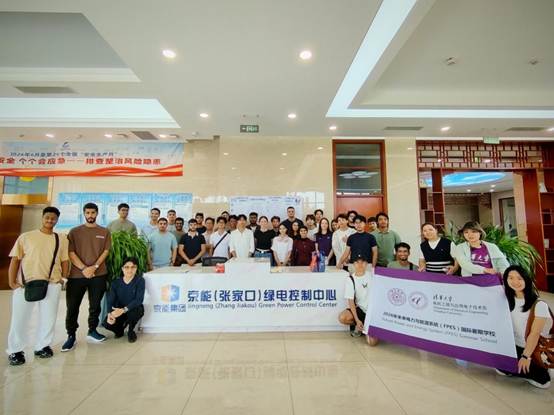
[Photo: Participants visit the Jingneng Zhangjiakou Green Power Control Center]
The group then traveled to the Zhangbei Wind Power Theme Park, located along the Grassland Sky Road, where rows of towering wind turbines stand against vast grasslands, creating a striking landscape that blends renewable energy infrastructure with the surrounding natural environment. The participants gained first-hand impressions of how the wind power industry has taken root in the grasslands and learned about approaches to balancing wind power development with ecological conservation. The visit also gave them a direct sense of the scale and development potential of China's large-scale wind and solar energy bases in the northern regions.
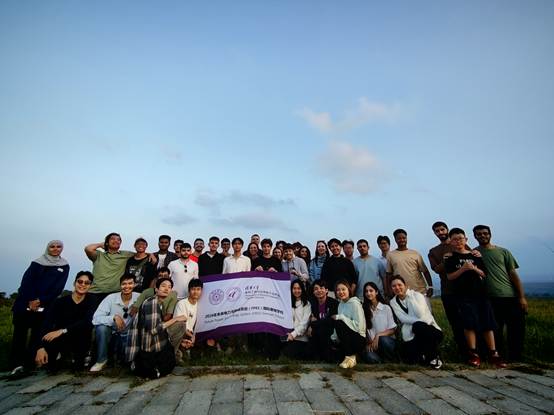
[Photo: Participants visit the Zhangbei Wind Power Theme Park]
On August 22, the group continued its cultural and geographical field study on the grasslands, visiting Gongbaolage Grassland to learn more about the natural geography and ethnic culture of the Zhangbei region. Gongbaolage means “land of deep springs” in Mongolian and historically served as an imperial horse pasture during the Qing Dynasty. Through the field visit, the participants experienced the natural environment and distinctive landscape of the Bashang grasslands. Combined with their visit to the renewable energy industry the previous day, the experience gave them a more direct understanding of the relationship between Zhangbei's natural resources, ecological environment, and industrial development. In the afternoon, the participants concluded their field study in Zhangbei and traveled back to Beijing.
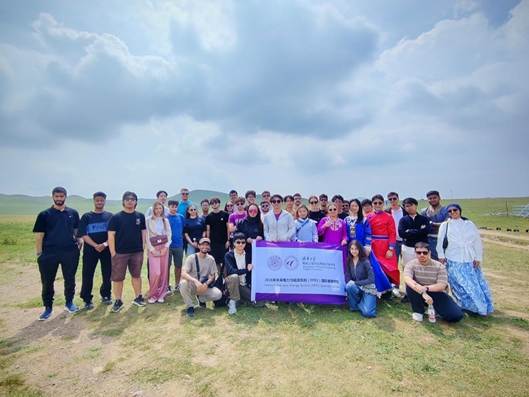
[Photo Group: Participants explore Gongbaolage Grassland]
The 2026 Future Power and Energy Systems (FPES) Summer School developed a multidimensional learning model combining “Tsinghua classroom learning + visits in Beijing + field study in Zhangbei,” integrating cutting-edge academic learning, first-hand exposure to engineering practice, and cross-cultural exchange. The program provided young students from around the world with insights into the latest developments and practices in the energy sector, facilitating dialogue and mutual learning among participants from different countries and academic backgrounds on major issues related to the energy transition. Through visits to research platforms, industrial sites, and renewable energy bases, the program also deepened participants' understanding of China's energy transition and its development pathways. The summer school further strengthened the ties between the Department of Electrical Engineering at Tsinghua University and young students from around the world, contributing to deeper international cooperation in power and energy education, greater exchange and mutual learning among young talent, and joint efforts to address the challenges of the global energy transition.


















 News & Events