On October 15, Professor Michael Pollitt, Professor of Business Economics at Cambridge Judge Business School, University of Cambridge, and Distinguished Visiting Professor at Tsinghua University, was invited to deliver a special lecture entitled “How to Deal with Excessively High or Low Energy Prices” in Conference Room 503, Section 3, West Main Building. Drawing on European energy market experience, the lecture examined the role of planned interventions and market design in addressing prolonged crisis conditions and negative electricity prices, and explored energy price fluctuations and response mechanisms with faculty members and students. Faculty members and student representatives from the Department of Electrical Engineering and the School of Economics and Management at Tsinghua University, as well as North China Electric Power University, Beijing Institute of Technology, and other institutions, attended the event. The lecture was chaired by Guo Hongye, Associate Research Fellow in the Department of Electrical Engineering.
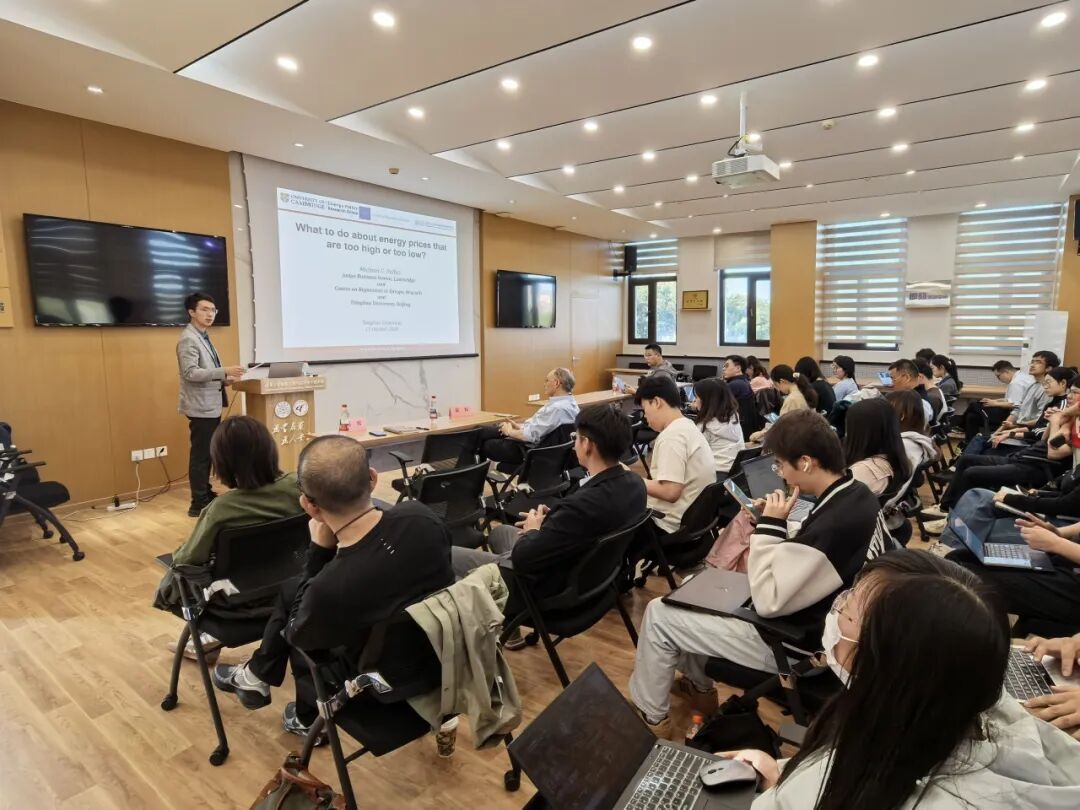
Guo Hongye Chairs the Lecture
From a broader societal perspective, Professor Pollitt discussed the problems caused by excessively high or low wholesale and retail energy prices. Drawing on Europe's experience in responding to the energy crisis from 2021 to 2023, he analyzed the role and limits of market intervention during the crisis and explored how intervention measures could be designed in advance to address sharp energy price fluctuations. He noted that intervention measures needed to balance short-term responses with long-term incentives. While mitigating price shocks, they should also avoid undermining market participants' incentives to invest and manage risks.
Addressing negative wholesale electricity prices amid the large-scale integration of wind and solar power, Professor Pollitt discussed the role that adjustments to market design could play. He emphasized the need to combine selective intervention with sound market design while allowing the market to continue playing its essential role in transmitting price signals, thereby striking a balance between addressing abnormal price fluctuations and maintaining the functioning of market mechanisms.
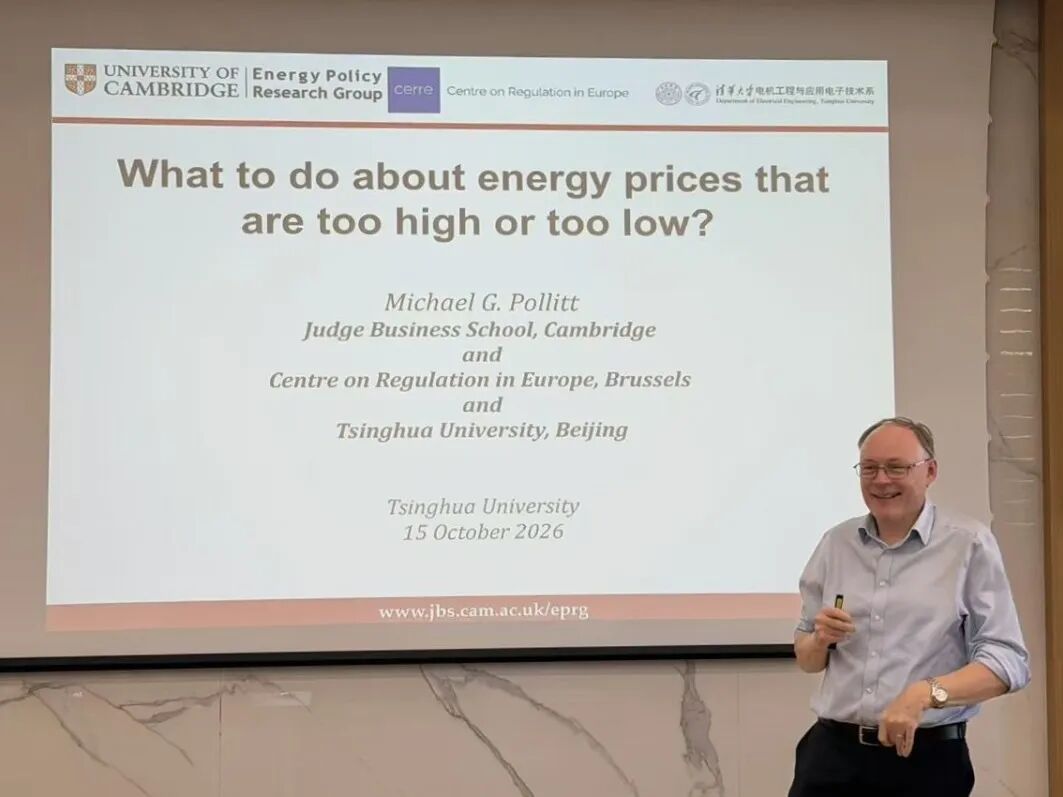
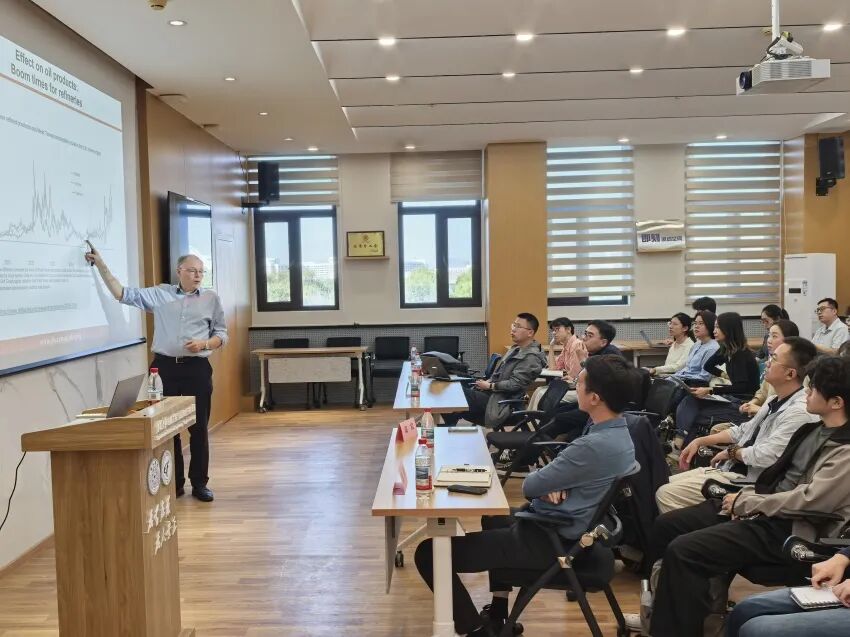
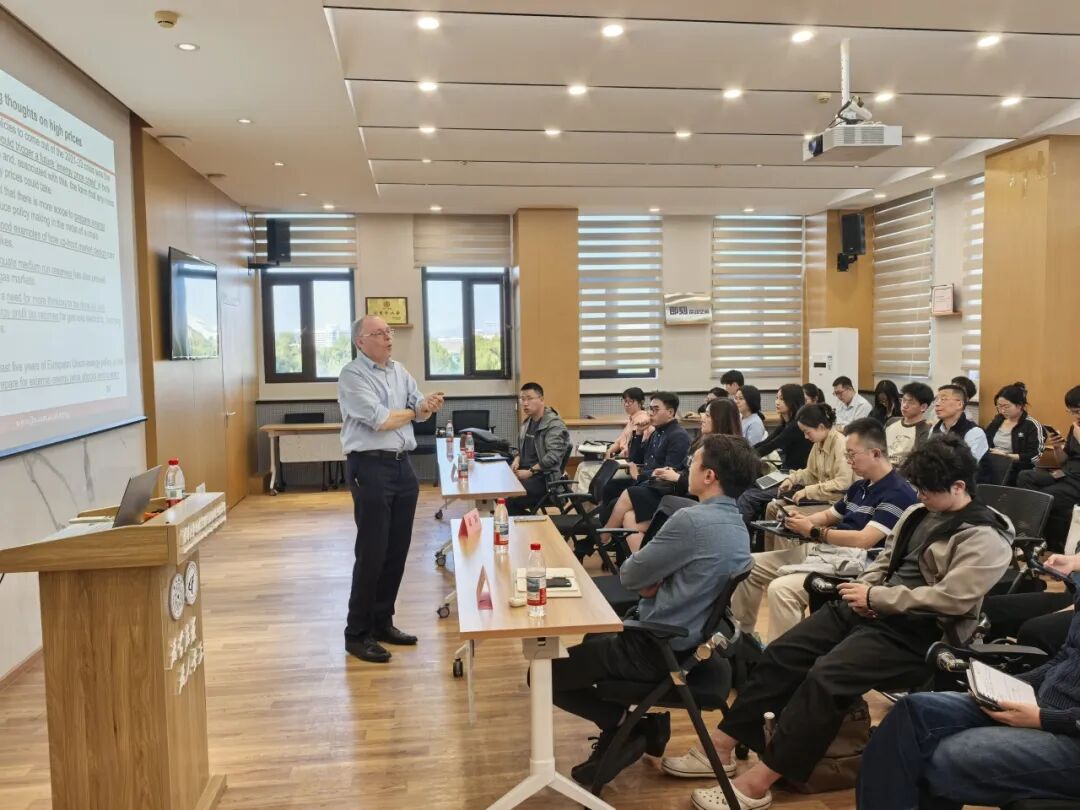
Professor Pollitt Delivers His Lecture
Faculty members and students engaged in discussions on government intervention during energy crises, long-term contracts and price risk hedging, and risk-sharing mechanisms for renewable energy. In response to a question about whether windfall taxes should be imposed on oil and gas companies and refining profits when oil and gas prices are high, with the proceeds returned to society, Professor Pollitt noted that such measures required careful consideration of their potential negative impact on investment, while also taking into account the practical need to increase fiscal revenue. The key was to design intervention mechanisms that did not distort market signals.
Regarding price risk management for industrial consumers and electricity retailers, Professor Pollitt drew on relevant market practices to explain how industrial consumers use three-year contracts and electricity retailers use one-year contracts to hedge price risks. He noted that long-term contracts helped manage price fluctuations, but systemic risks such as extreme weather could not be fully hedged through the market and required joint sharing by the government or society.
Regarding the allocation of risks associated with wind power output and spot electricity prices, participants discussed how different risk-sharing arrangements affected investment incentives for renewable energy. Professor Pollitt emphasized the need to distinguish between predictable weather fluctuations and unpredictable extreme events. The former could be managed through modeling and financial hedging, while the latter required appropriate institutional arrangements to provide safeguards, thereby balancing reasonable risk sharing with investment incentives.
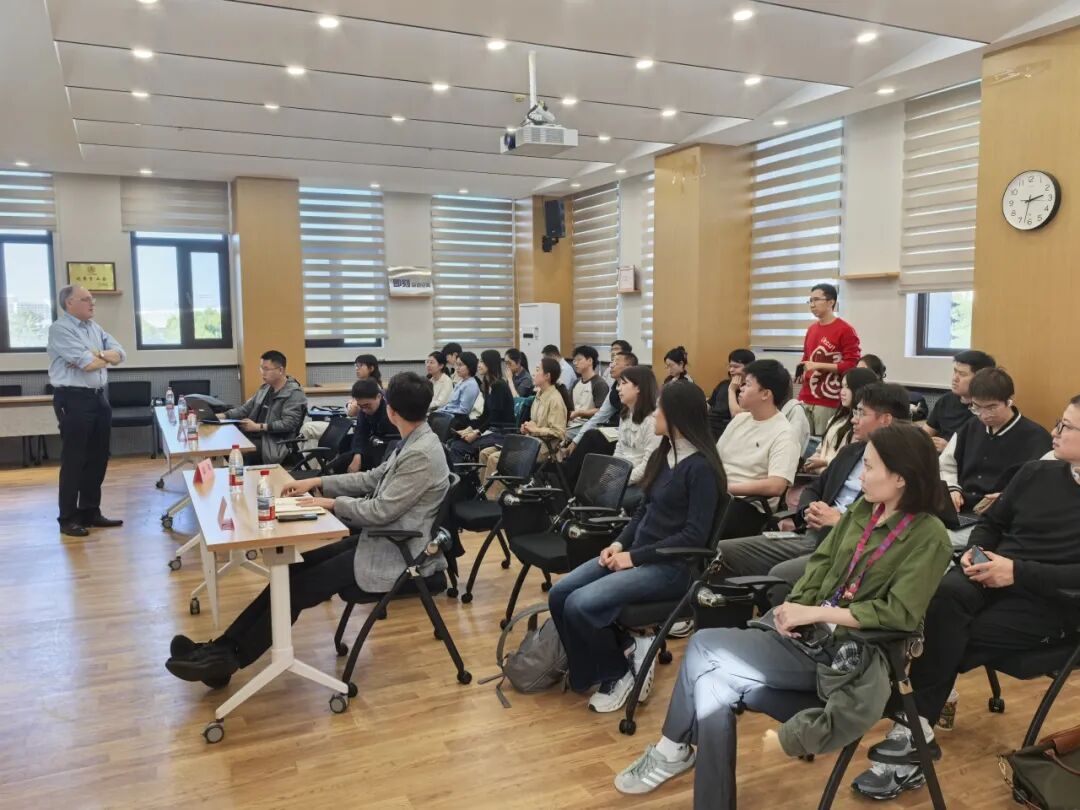
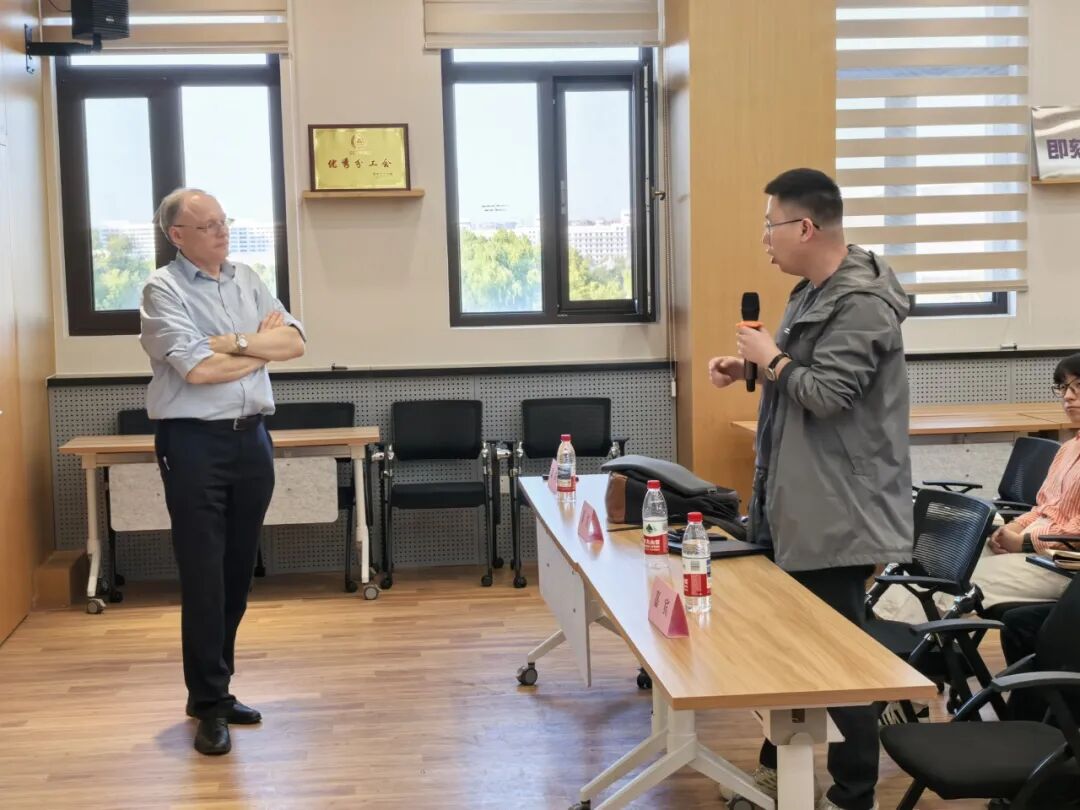
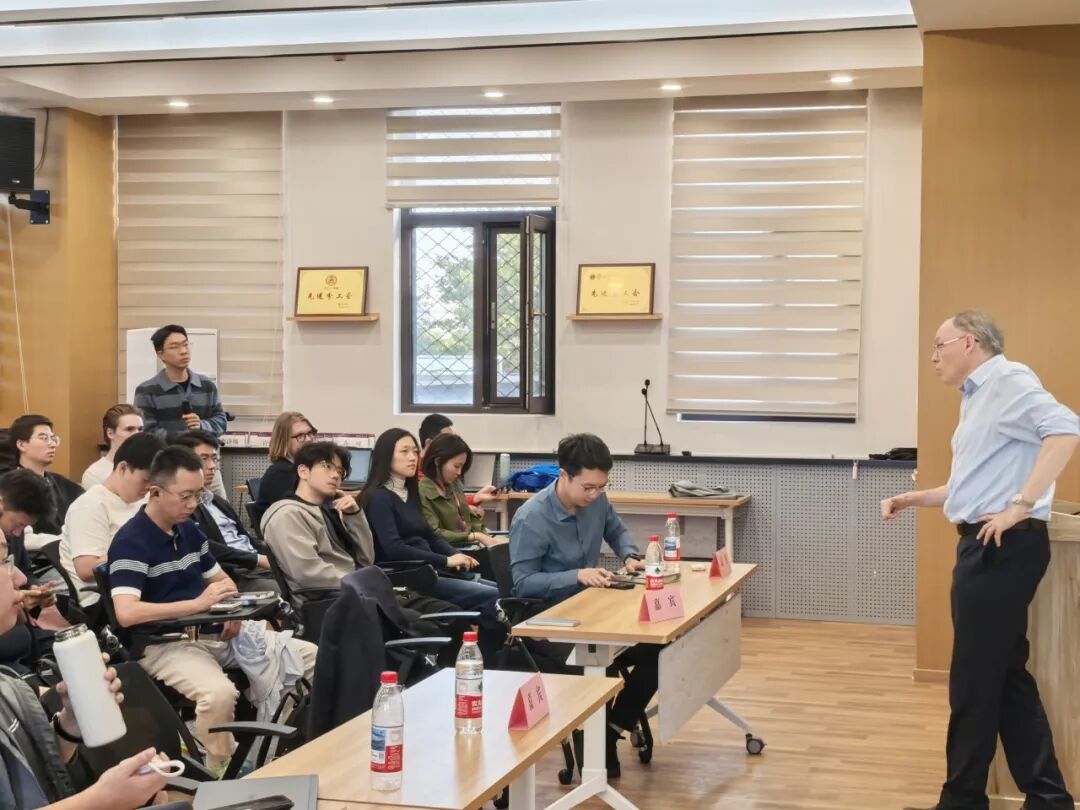
Q&A Session
Drawing on experience from the UK and European energy markets, the lecture addressed faculty members' and students' concerns about practical issues facing electricity markets in China and Europe. It provided useful insights into the relationship between energy price fluctuations, market design, and crisis intervention, while creating an opportunity for academic exchange on electricity market reform and risk management in the context of the energy transition.
Guest Profile
Michael Pollitt is Professor of Business Economics at Cambridge Judge Business School, Co-Director of the Energy Policy Research Group, and a Fellow in Economics and Management at Sidney Sussex College, University of Cambridge. He also serves as a Distinguished Visiting Professor at Tsinghua University and Honorary Director of the Florence School of Regulation's Centre on Regulation in Europe, based in Brussels. From 2007 to 2011, he served as an external economic advisor to the UK's Office of Gas and Electricity Markets (Ofgem). From 2020 to 2023, he served as Vice President of the International Association for Energy Economics. He has published 14 books and more than 120 peer-reviewed journal articles in areas including efficiency analysis, energy policy, and business ethics. Together with J.-M. Glachant and P. Joskow, he co-edited Handbook on Electricity Markets (Edward Elgar Publishing, 2021) and Handbook on the Economics of Electricity Regulation (Edward Elgar Publishing, 2025). He has long been committed to research on China's electricity market reform. His 2020 book, Reforming the Chinese Electricity Supply Sector: Lessons from Global Experience, was published in Chinese by China Social Sciences Press in 2024.


















 News & Events