The 2026 Annual Academic Conference of the Energy Internet Committee of the Chinese Society for Electrical Engineering was held in Wuhan from October 16 to 17. A total of 150 participants attended the conference, including Academician Chen Weijiang of the Chinese Academy of Sciences and Chair of the Committee, Academician Sun Hongbin of the Chinese Academy of Sciences and President of Taiyuan University of Technology, members of the Committee, and experts and scholars from universities, research institutes, and power companies across China.
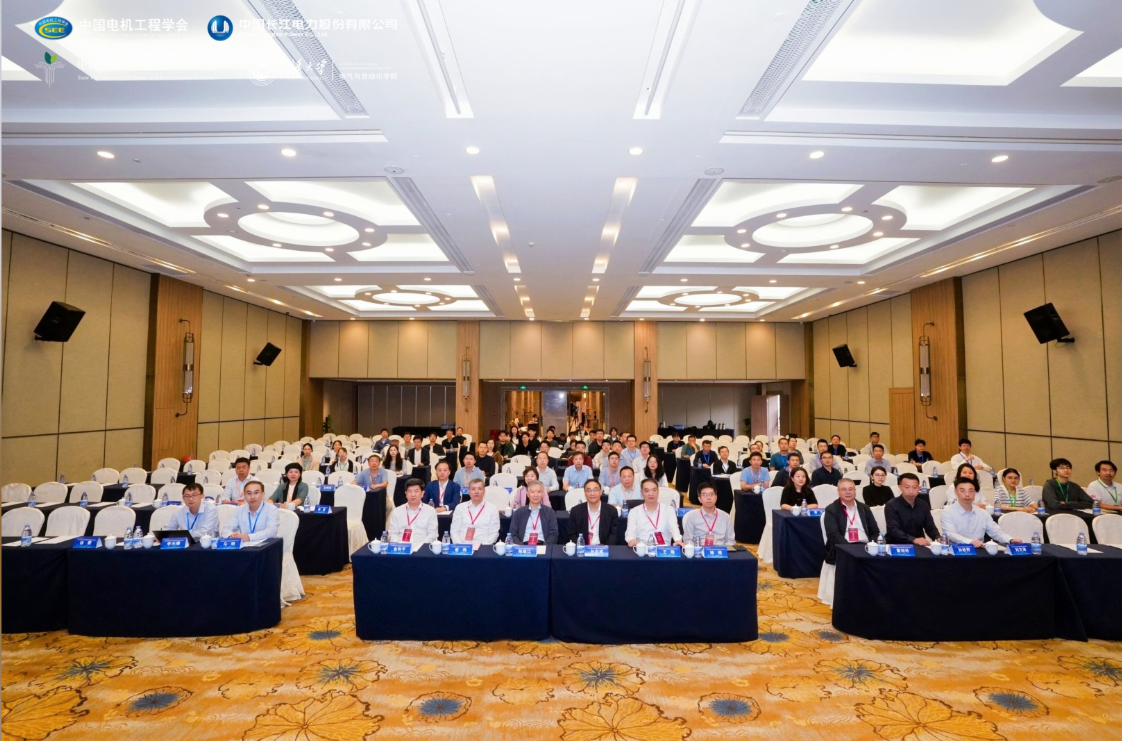
[Panoramic View of the Conference Venue]
Cui Wei, Deputy Secretary-General of the Chinese Society for Electrical Engineering; Wang Han, Deputy Secretary of the CPC Wuhan University Committee and Secretary of the University Commission for Discipline Inspection; and Jin Heping, Deputy Director of the Science and Technology Committee of China Three Gorges Corporation, attended the conference and delivered opening remarks. The opening ceremony was chaired by Professor Dong Xuzhu, Director of the State Key Laboratory of Power Grid Environmental Protection at Wuhan University.
The annual conference was held under the theme “Innovation-Led Energy Development, Digital Intelligence Empowering a Green Future.” During the invited report session, Academician Chen Weijiang delivered a report entitled “Reflections on the '1+N' Evolution of the Physical Architecture of New Power Systems.” He proposed an evolutionary architecture in which a wide-area power system is flexibly interconnected with multiple green local power systems dominated by renewable energy and energy storage. Drawing on typical scenarios such as large-scale renewable energy bases in deserts, the Gobi, and other arid areas, as well as offshore wind power, he outlined the evolutionary pathway and recommended promoting integrated planning, construction, and operation to facilitate coordination between wide-area and local power systems. Academician Sun Hongbin delivered an invited report entitled “The New Energy Internet: A Supporting Platform for the New Energy System.” Focusing on the role of the new energy internet in supporting the development of a new energy system, he shared the latest research findings on the coordinated operation of heterogeneous energy sources, energy management, and control, providing forward-looking insights and practical references for building a new energy system.
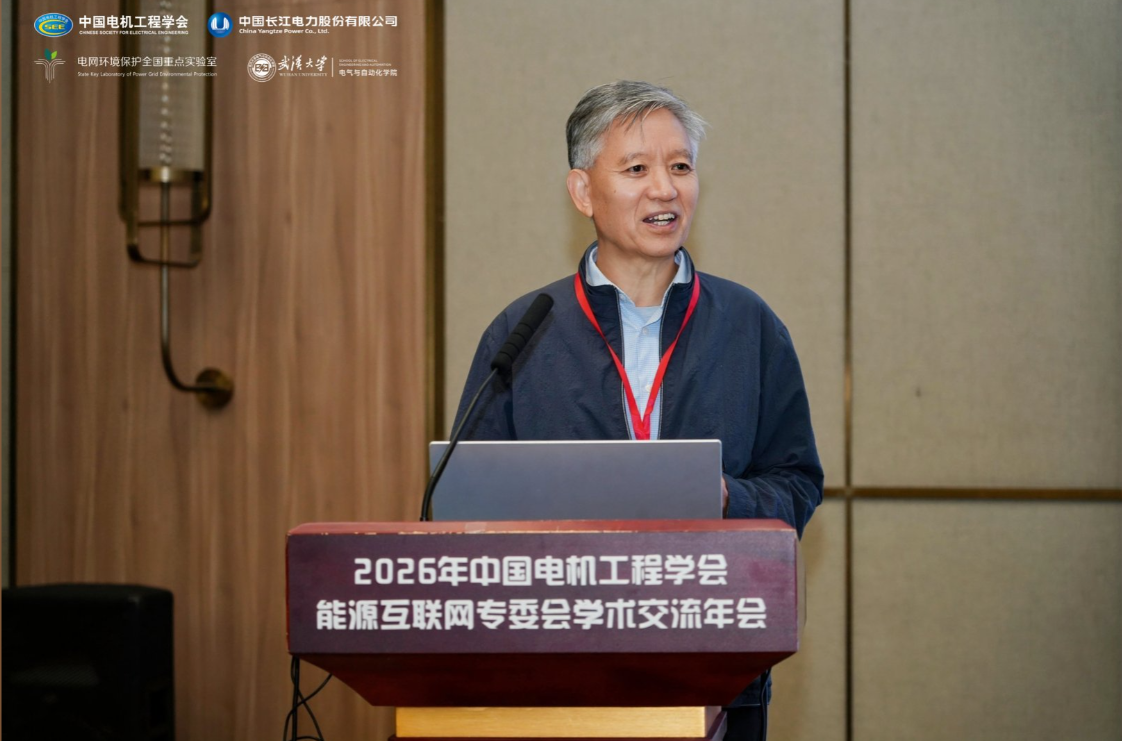
[Academician Chen Weijiang Delivers a Report]
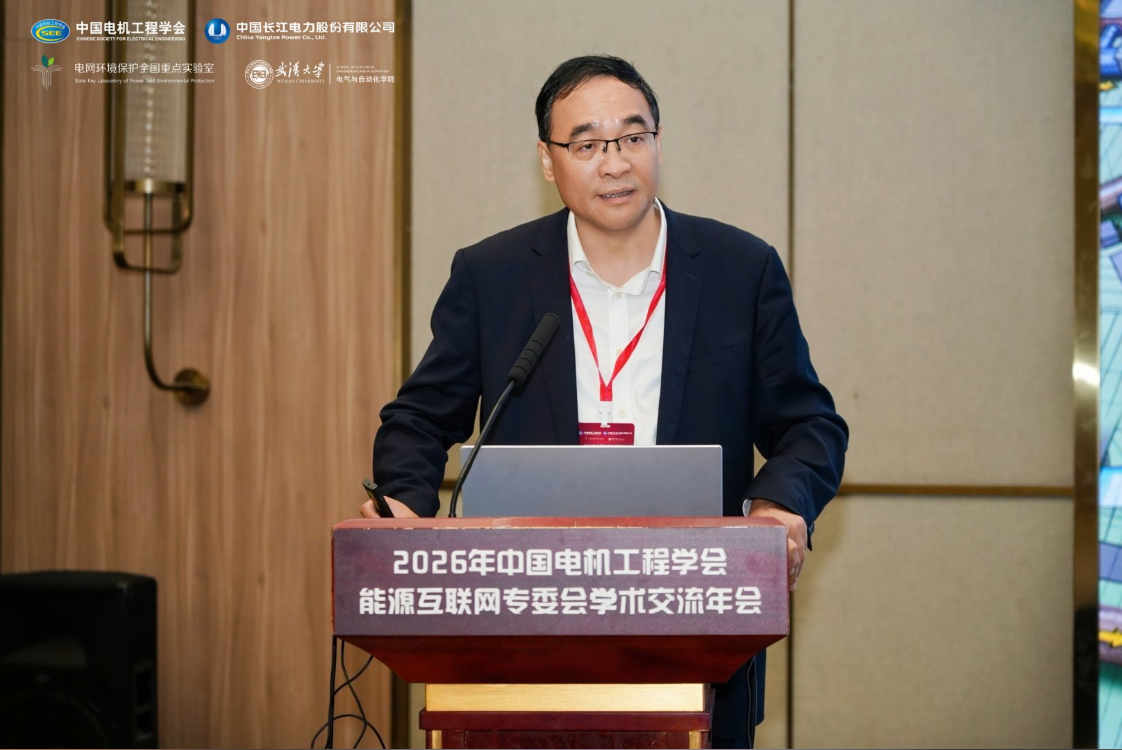
[Academician Sun Hongbin Delivers a Report]
During the keynote report session, Sun Qiuye, Vice President of Shenyang University of Technology, delivered a report entitled “Cooperation and Game Theory in Bit-Watt Integration: Challenges and Reflections on Computing-Power–Electricity Coordination,” analyzing practical challenges and key difficulties in the coordinated development of computing power and electricity. Lu Chao, Deputy Dean of the Department of Electrical Engineering at Tsinghua University, delivered a report entitled “AI-Empowered Knowledge Engine Development and Open Ecosystem Building for the Discipline of Electrical Engineering,” presenting practical explorations into using AI to develop the knowledge system of electrical engineering and proposing the establishment of an open and shared knowledge engine ecosystem. Li Guangyao, Deputy Plant Manager and Chief Engineer of the Three Gorges Hydropower Plant of China Yangtze Power Co., Ltd., delivered a report entitled “Applications of Robots in Hydropower Stations,” introducing the results achieved through robot applications in inspection, maintenance, and emergency response, and discussing prospects for the development of smart hydropower. Xu Jian, Deputy Director of the Institute of Science and Technology Development at Wuhan University, delivered a report entitled “Development of a Simulation and Verification Platform for Multi-Energy Complementary Operation and Control of Hydropower, Wind Power, and Solar Power, and Key Technology Research,” introducing the platform's development approach and progress in key technologies such as multi-energy coordinated optimization and joint dispatch and control.
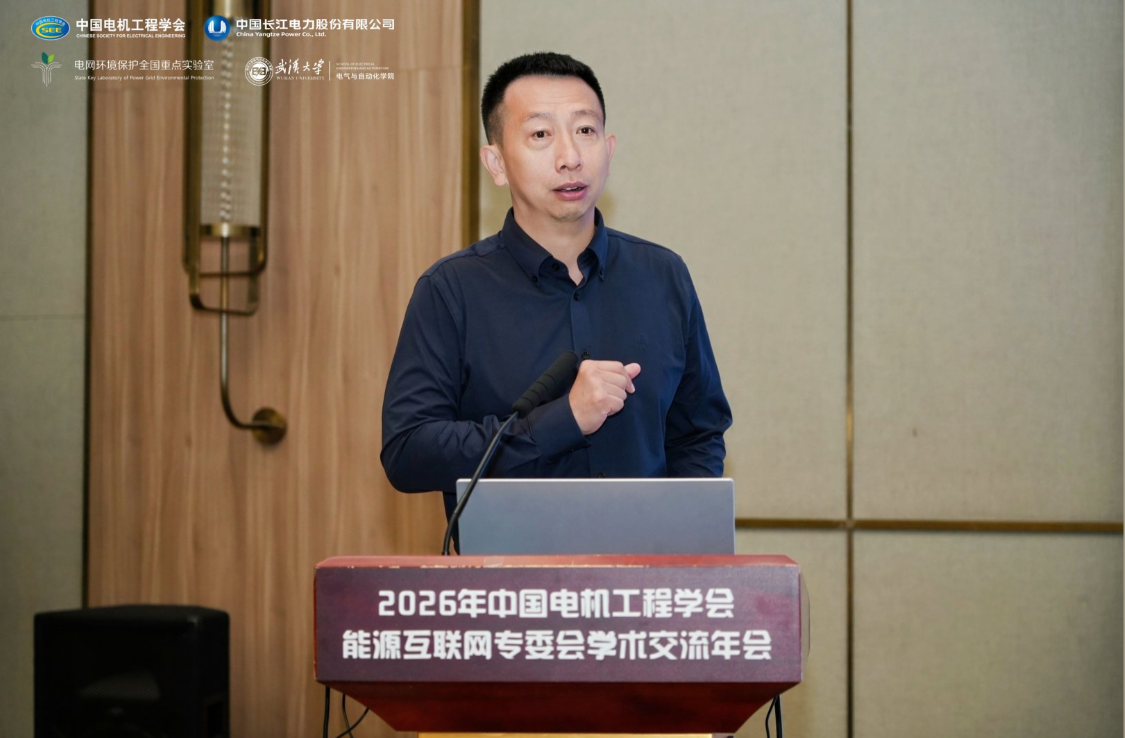
[Sun Qiuye Delivers a Report]
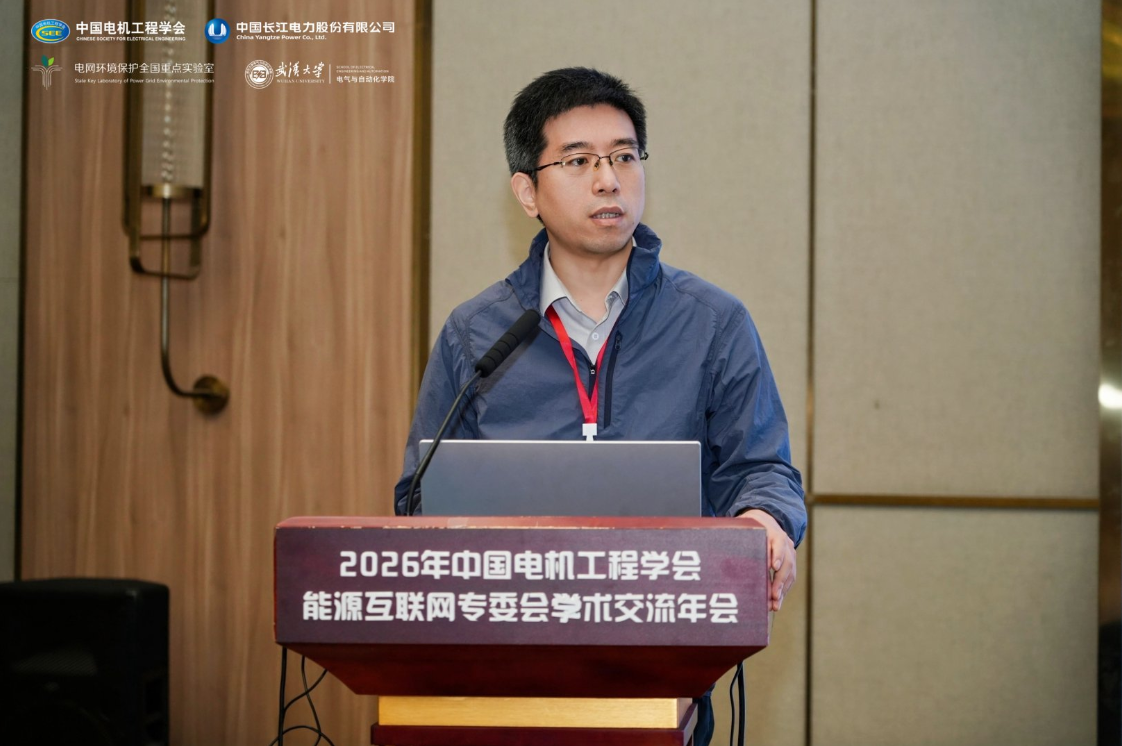
[Lu Chao Delivers a Report]
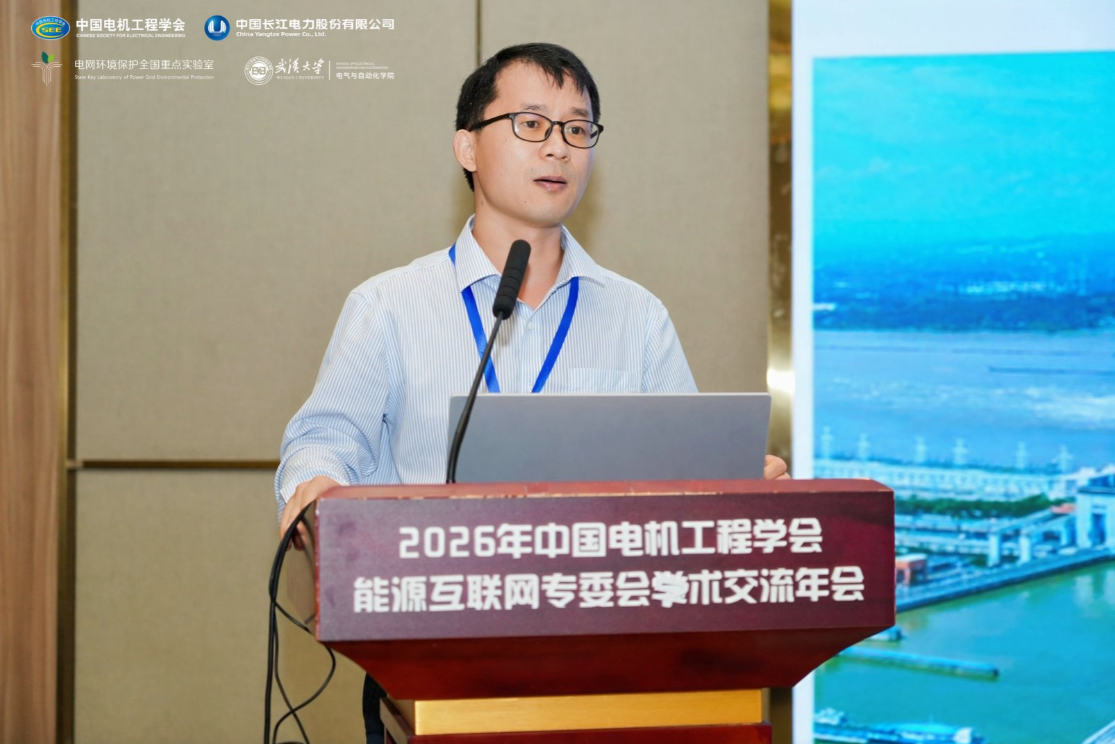
[Li Guangyao Delivers a Report]
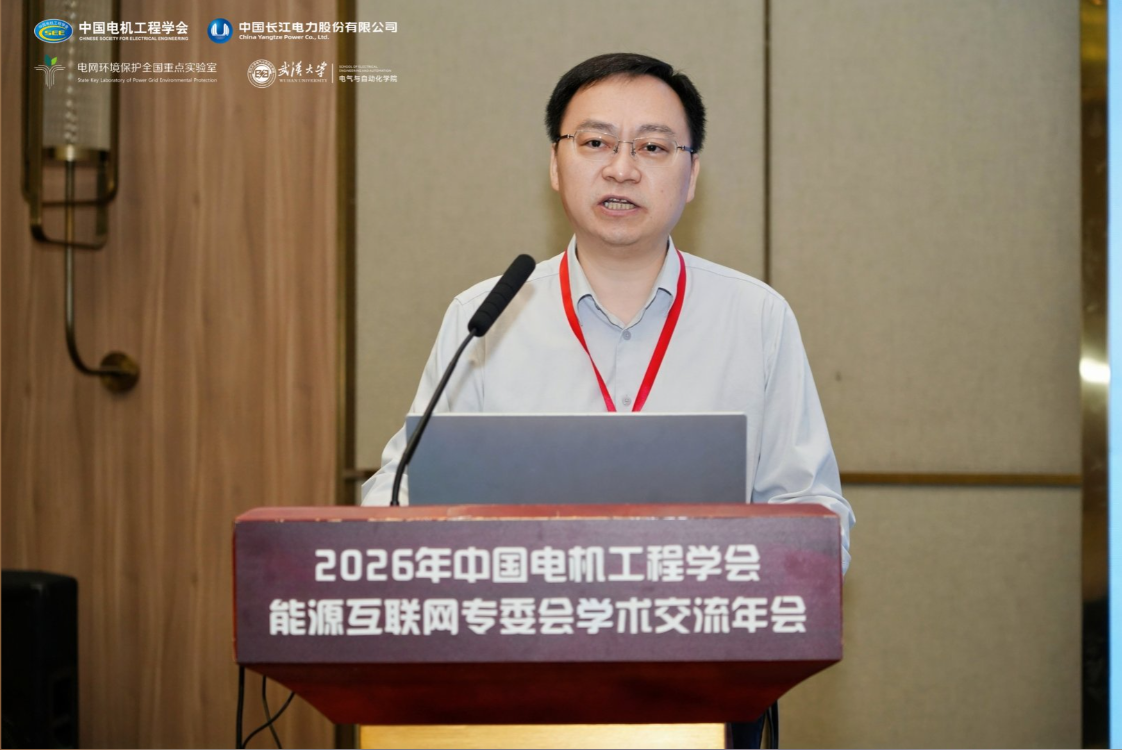
[Xu Jian Delivers a Report]
The Young Scholars Forum featured two thematic sessions: “Multi-Energy Complementarity of Renewable Energy” and “Mutual Empowerment of Artificial Intelligence and Energy.” The sessions were chaired by Yuan Jiaxin, Deputy Director of the State Key Laboratory of Power Grid Environmental Protection at Wuhan University, and Meng Yao of the Energy Internet Innovation Institute of Tsinghua University, respectively. The forum featured presentations and exchanges on topics including “Optimal Regulation and Control Technologies and Applications for Multi-Energy Complementarity of Hydropower, Wind Power, Solar Power, and Energy Storage Across River Basins”; “Coordinated Planning and Operation of Distribution and Transportation Networks Considering Multiple Sources of Uncertainty”; “Integrated Wind-Electric-Thermal Conversion Motors: Topological Innovation, Performance Optimization, and Coordinated Control”; “Highly Reliable Anti-Islanding Protection Technologies and Applications for Distribution Networks with High Penetration of Renewable Energy”; “Research on Short-Circuit Current Suppression Technologies for Multi-Energy Complementary Hydropower, Wind Power, and Solar Power Systems”; “Mutual Empowerment of Artificial Intelligence and Energy to Accelerate Industrial Innovation and Development”; “Practical Applications and Explorations of Computing-Power–Electricity Coordination in the Context of Rapid AI Development”; “Defining Computing-Power–Electricity Coordination Through an Energy Brain and Building a New Paradigm for Integrating AI Computing Power with Green Energy”; “Development and Practice of an Intelligent Hydropower Industrial Internet Platform for Large-Scale Hydropower Station Clusters”; “Preliminary Exploration of AI Foundation Models in Energy and Power Systems”; “AI-Driven Transient Security and Stability Analysis and Decision-Making for New Power Systems”; and “Explorations into the Application of Scientific Intelligent Computing in New Power Systems.”
The conference heard the annual work report of the Committee. The Committee also held a working meeting during the conference and organized a Party-building activity at Shouyi Square, using high-quality Party building to guide and strengthen its work.
Closely aligned with national energy strategy priorities at the beginning of the 15th Five-Year Plan period, the annual conference focused on cutting-edge topics including the development of a new energy system and new power systems, computing-power–electricity coordination, and “AI + Energy,” establishing a high-level platform for academic exchange. The successful convening of the annual conference will further promote multidisciplinary and cross-industry exchanges and cooperation in the energy internet field, advance the deep integration of industry, academia, research, and application, and contribute expertise and strength to scientific and technological innovation and high-quality industrial development in the energy internet sector, as well as to the development of China into a leading energy power.


















 News & Events