On October 26, the appointment ceremony for a Distinguished Visiting Professor at Tsinghua University and an academic lecture were held in Conference Room 103, Section 3, West Main Building, Tsinghua University. Professor Kai Strunz of Technische Universität Berlin, Germany, visited Tsinghua University at the invitation of the university and was appointed Distinguished Visiting Professor. He also delivered an invited academic lecture on the modeling and control of integrated power electronics and power systems. The event was attended by experts and scholars including Kang Chongqing, Dean of the Department of Electrical Engineering; Gao Feng, Deputy Dean of the Energy Internet Innovation Institute; Hu Zechun, Director of the Institute of Power Systems of the Department of Electrical Engineering; Fei Teng, Reader at Imperial College London and Senior Visiting Scholar at Tsinghua University; Xia Yue, Associate Professor at China Agricultural University; and Guo Hongye, Associate Research Fellow in the Department of Electrical Engineering, along with more than 30 faculty members and students. The lecture was chaired by Sun Kai, Deputy Dean of the Department of Electrical Engineering.
At the appointment ceremony, Sun Kai introduced Professor Strunz's academic achievements and his significant contributions to promoting academic exchanges and talent development between China and Germany. Subsequently, Kang Chongqing, Dean of the Department of Electrical Engineering, presented Professor Strunz with the appointment letter as a Distinguished Visiting Professor at Tsinghua University.
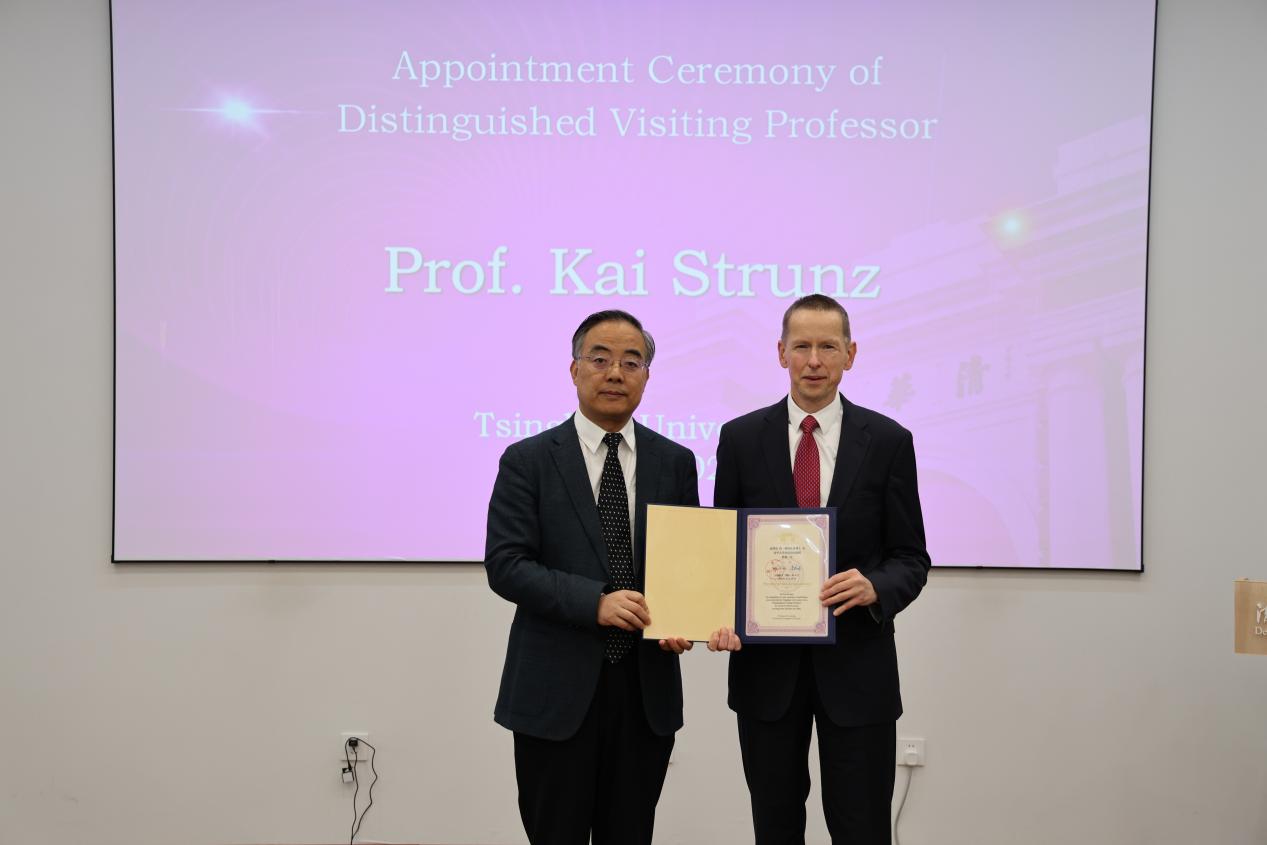
Kang Chongqing Presents Professor Strunz with the Appointment Letter as a Distinguished Visiting Professor at Tsinghua University
In his remarks following the appointment, Professor Strunz said that he was deeply honored to accept the appointment as a Distinguished Visiting Professor at Tsinghua University and expressed his sincere gratitude to the university for inviting him to visit and participate in a series of academic activities. He noted that the Department of Electrical Engineering at Tsinghua University had achieved outstanding academic excellence and enjoyed an excellent global reputation in electrical engineering. His collaboration with Tsinghua began when he supervised Gao Feng's academic research. He subsequently conducted collaborative research with several professors from the department on power system modeling and simulation. Years of in-depth exchanges had fostered a close relationship between the two sides. He looked forward to further strengthening their cooperation in academic research, talent development, and international conferences.
In his invited lecture, Professor Strunz discussed the modeling and control of integrated power electronics and power systems, analyzing the new challenges arising from the high penetration of renewable energy and the large-scale integration of power electronic equipment. He pointed out that as power systems transition from being dominated by conventional synchronous generators to becoming more complex, active, and highly power-electronics-based systems, changes are occurring in system inertia, fault characteristics, and frequency and voltage stability. These developments are imposing new requirements on conventional modeling, simulation, and control technologies. Renewable energy generation currently accounts for 50% of Germany's electricity generation, with wind and solar power serving as major power sources and the share of synchronous generating units continuing to decline. Enabling renewable energy sources to emulate the inertial support capabilities of synchronous machines has therefore become a pressing practical challenge in Europe's energy transition.
In addressing these issues, Professor Strunz introduced his team's research on grid-forming converter control, virtual impedance, IP controllers, feedforward control for fast inertial response in wind farms, and multiscale simulation modeling. He also shared engineering practices involving the Irish island power grid, cross-regional HVDC transmission in Germany, and the European MIGRATE research project, demonstrating an interdisciplinary research pathway for future energy systems. Professor Strunz also discussed new challenges in the simulation and modeling of multi-energy coupled systems in the context of the energy internet. Electricity, heating, and gas networks differ considerably in their dynamic characteristics, making conventional power system simulation tools difficult to adapt directly to the computational requirements of district heating networks and natural gas networks. He introduced his team's equivalent-circuit modeling method for pipelines, which enables the simulation of dynamic processes in heating networks. He also presented a multiscale simulation approach based on analytical signals, balancing computational efficiency and accuracy and providing a new technical tool for the analysis of multi-energy systems. Taking a power grid incident in Spain as an example, he emphasized the importance of voltage control and coordination between power sources and the grid in scenarios involving high shares of renewable energy.
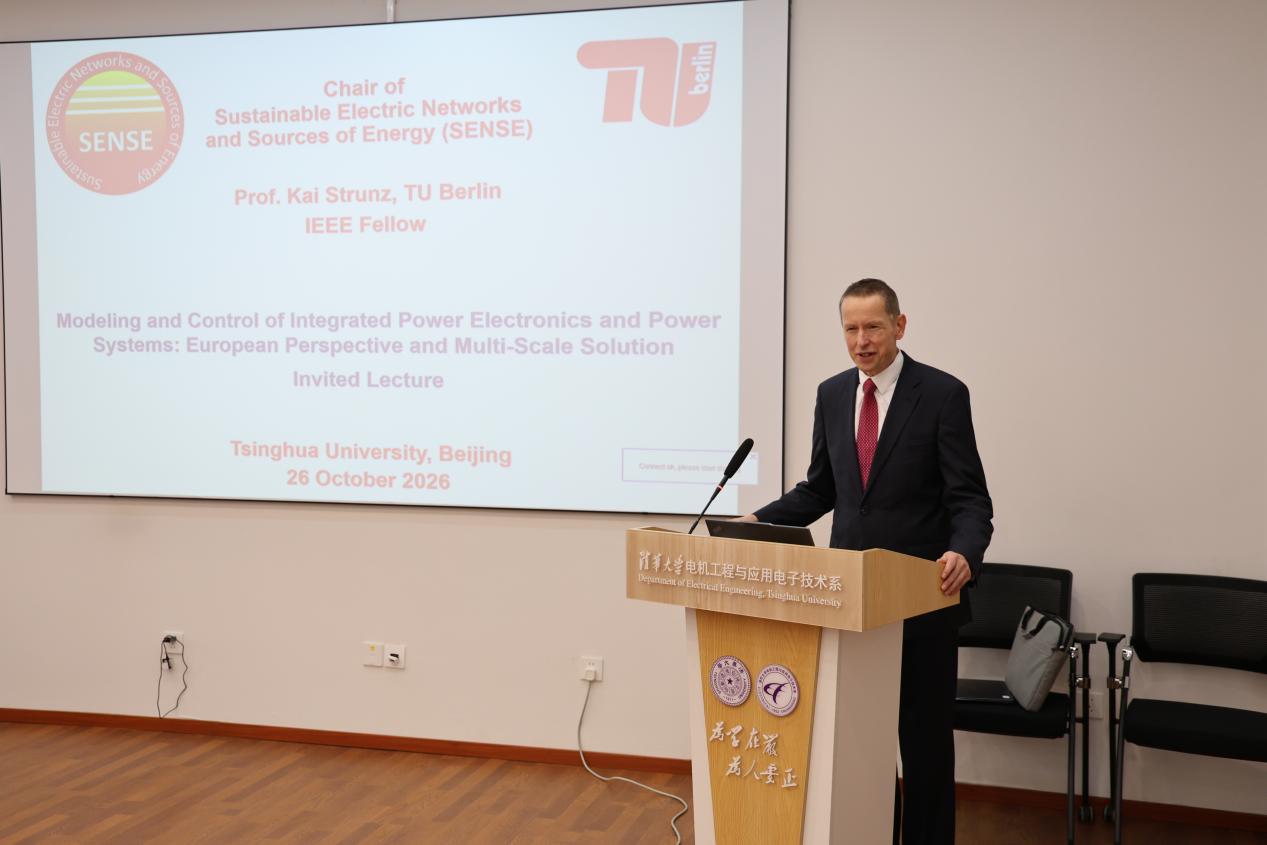
Professor Strunz Delivers an Academic Lecture
Following the lecture, faculty members and students engaged in in-depth discussions on issues including fault handling in island power grids, the impact of wind turbine inertial response on generating unit operation, and Germany's experience in maintaining stable operation of power grids with high shares of renewable energy. Professor Strunz explained that power grids with high shares of renewable energy should not focus solely on power electronic converters themselves. Full consideration must also be given to the constraints of underlying physical power sources such as wind turbines, photovoltaic systems, and energy storage. Equivalent reduced-order modeling methods can be adopted to reduce simulation computational demands while retaining essential system characteristics.
The appointment ceremony and invited lecture established a platform for face-to-face academic exchanges and discussions between China and Germany in the field of electric power. Drawing on actual European projects and power grid operation cases, the lecture provided faculty members and students with first-hand research experience in the overseas energy transition. The question-and-answer session generated numerous academic insights and laid a sound foundation for future collaborative research between the two sides in areas such as the utilization of grid-forming resources, multiscale simulation, and multi-energy interconnection. At the end of the event, all participants gathered for a group photograph.
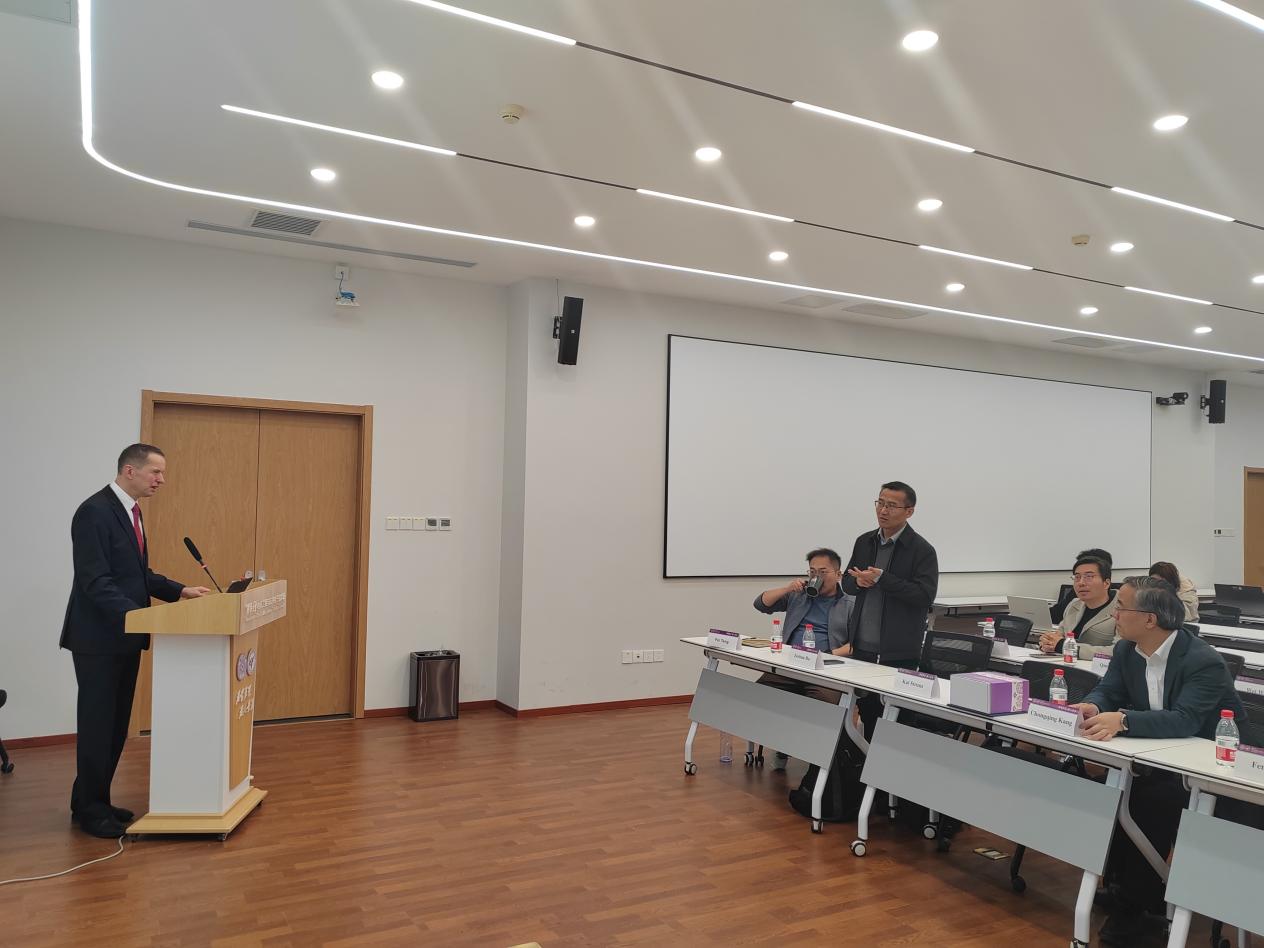
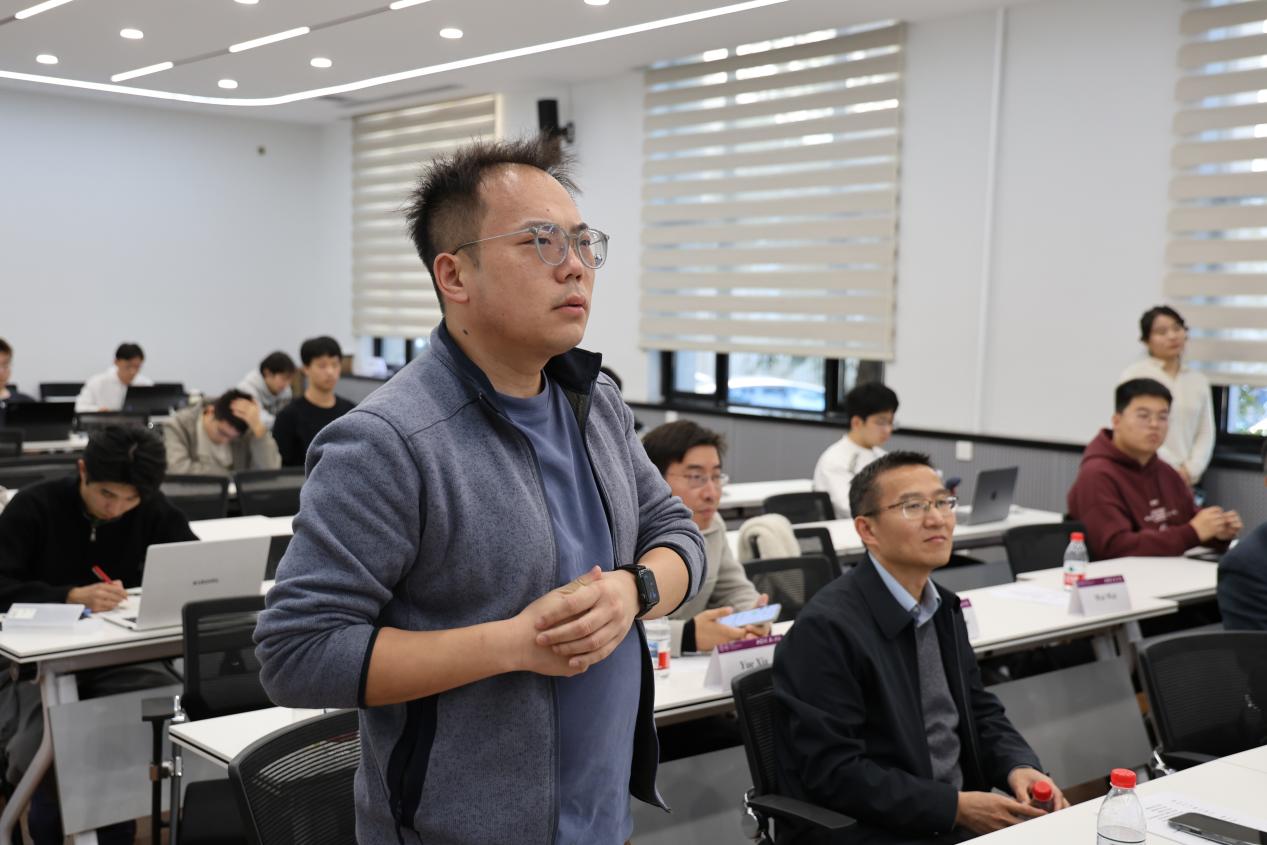
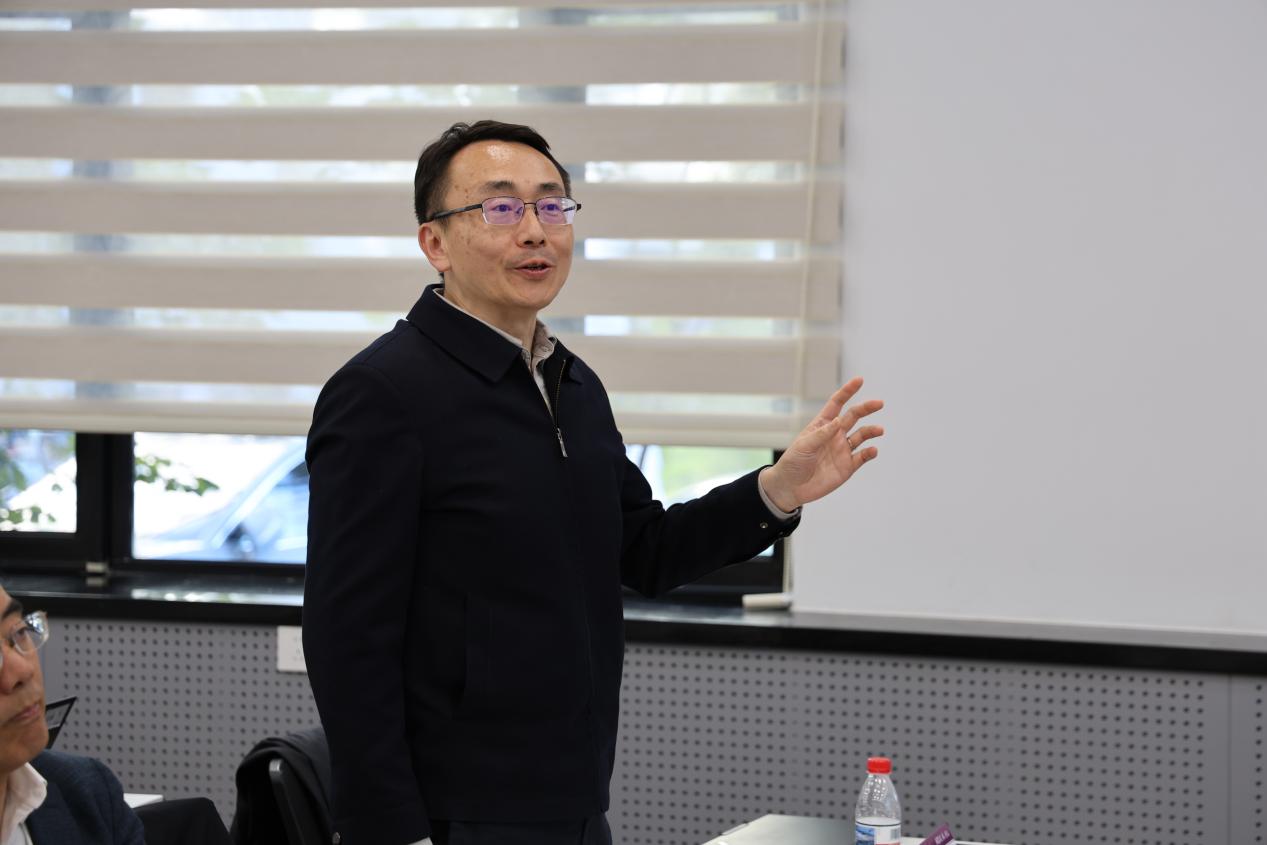
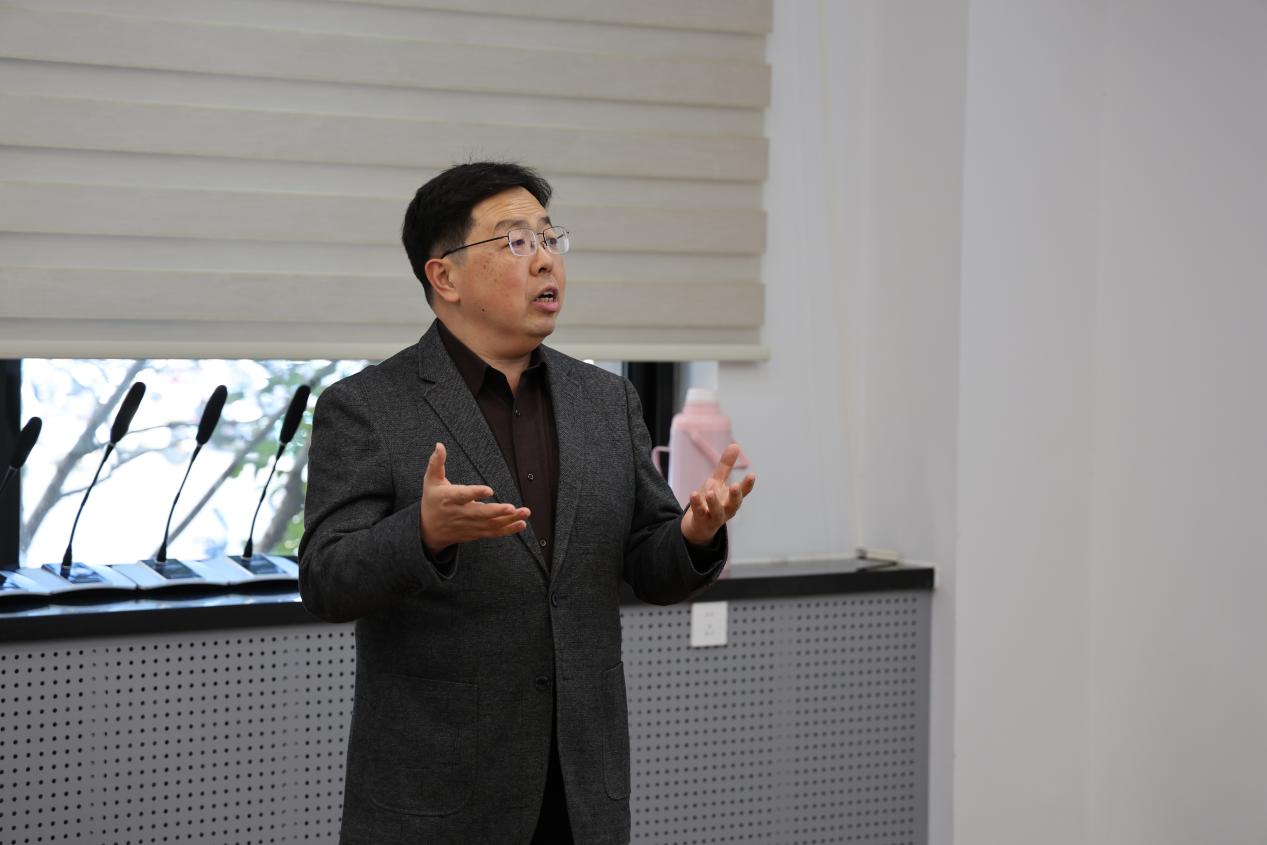
Q&A Session
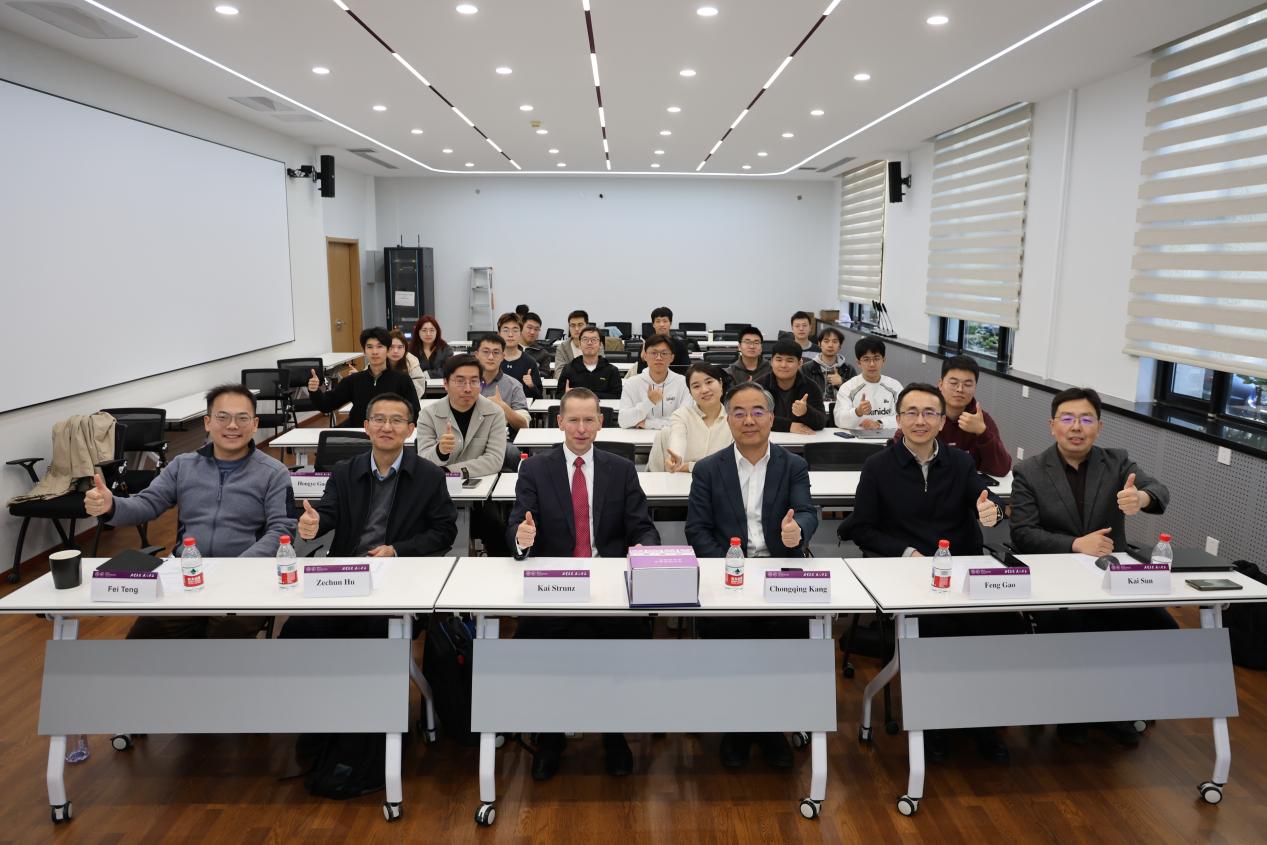
Group Photograph of Participants
[Guest Profile]
Professor Kai Strunz received his PhD from Saarland University in Germany. From 1997 to 2002, he worked as a research engineer in the R&D department of Électricité de France (EDF). From 2002 to 2007, he served as an Assistant Professor of Electrical Engineering at the University of Washington in the United States. Since 2007, he has been Professor of Sustainable Electric Networks and Energy Systems at Technische Universität Berlin, while also serving on the supervisory boards of several companies in Berlin.
Professor Strunz is an IEEE Fellow. He currently serves as Chair of the Energy Development and Power Generation Committee of the IEEE Power & Energy Society (PES) and Co-Chair of the IEEE PES Working Group on Dynamic Performance and Modeling of HVDC Systems and Transmission Power Electronics. He has also served as a member of the IEEE PES Technical Council. In 2012, he served as Chair of the IEEE PES Innovative Smart Grid Technologies Europe Conference (ISGT). As a Review Editor for the Intergovernmental Panel on Climate Change (IPCC), he contributed to the preparation of the Special Report on Renewable Energy Sources and Climate Change Mitigation. He received the U.S. National Science Foundation's CAREER Award in 2002 and IEEE PES Outstanding Paper Awards in 2015, 2023, and 2025.


















 News & Events