On April 20, the Young Faculty Salon and the “Young Faculty Development Mentor (Mentor) Committee” meeting of the Department of Electrical Engineering, Tsinghua University, was held in Conference Room 3-102 of the West Main Building. Deputy Director of the Faculty Affairs Office Wang Renmo, Department Dean Kang Chongqing, Party Secretary Zheng Zedong, members of the Department’s Mentor Committee, and representatives of young faculty attended the meeting. The session was chaired by Deputy Party Secretary Wu Wenchuan.
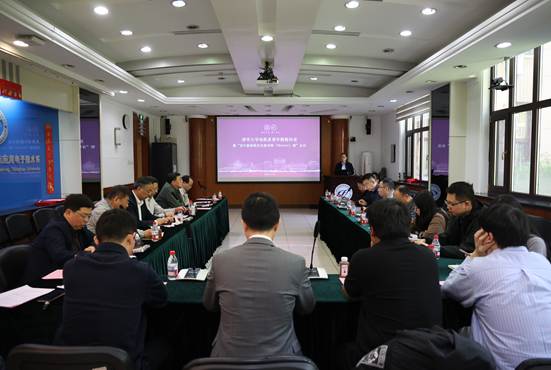
At the event
Zheng Zedong reviewed and provided a detailed introduction to the objectives and implementation plan of the departmental Mentor system. As one of the first engineering departments in the university to implement the Mentor system, the Department of Electrical Engineering has actively explored this mechanism since 2022. Through a “passing on, assisting, and guiding” model, it aims to help new faculty quickly adapt to their roles, clarify career development directions, and enhance teaching and research capabilities, thereby laying a solid foundation for long-term development. He emphasized that, under the new context of rapid technological change and disciplinary evolution, young faculty members must quickly integrate into Tsinghua’s culture and adapt to industry development trends.
Faculty representative Peng Lisha shared her personal experience and growth under the Mentor system, describing the valuable guidance received from committee mentors in academic research, career planning, and team integration. She also expressed sincere gratitude for the support platform established by the department.
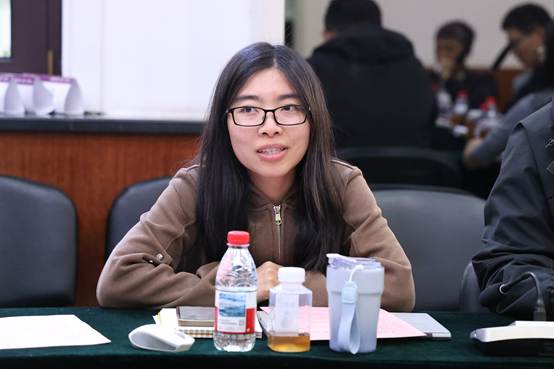
Peng Lisha delivered a speech
Mentor representatives Sun Kai and Guo Qinglai, based on years of mentoring experience, shared insights on strengthening the Mentor system and improving its effectiveness, emphasizing the core value of mentors as both “guides” and “supporters.” They noted that mentors are not only advisors but also partners in mutual growth, encouraging young faculty to actively seek guidance, engage in broad communication, and fully leverage departmental and institutional resources.
Kang Chongqing announced the list of newly appointed mentors for incoming faculty in 2026 and presented appointment letters to attending mentors.
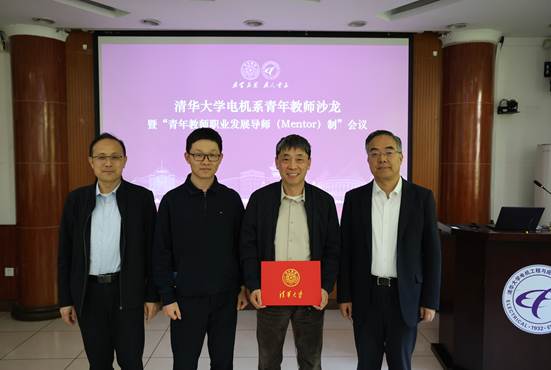
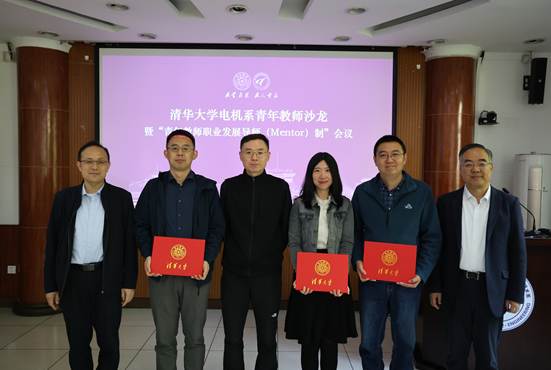
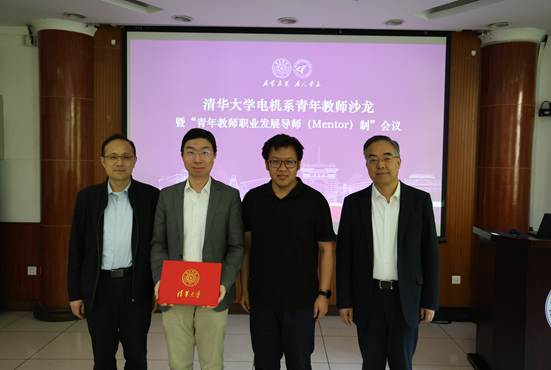
Appointment Ceremony
Wang Renmo introduced the latest progress in the university-level Mentor system implementation and its evaluation. He stated that the Faculty Development Center will continue to serve as a strong support platform by organizing diverse training and exchange activities and building cross-department communication channels, thereby promoting and scaling up best practices across departments.
In the open discussion session, faculty members actively exchanged views in a lively atmosphere. Many young faculty shared their personal experiences and reflections on the support received through the Mentor system.
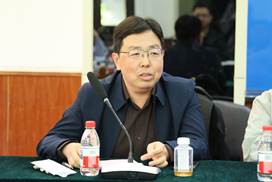
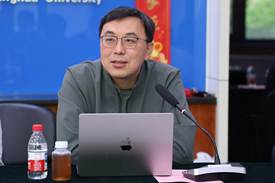
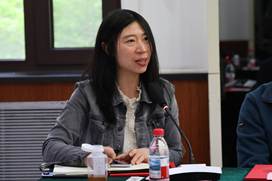
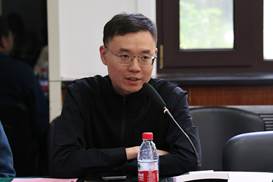
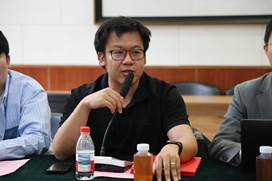
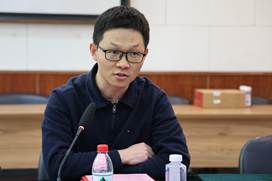
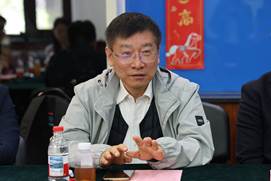
Open discussion
Kang Chongqing delivered the concluding remarks. He noted that the Department of Electrical Engineering, as one of the first departments to implement the Mentor system, has continuously refined the mechanism under university guidance. He then put forward three expectations for new faculty members: First, rapid integration into the departmental community. New faculty should actively understand the department’s history, traditions, and academic culture. Overseas recruited faculty, in particular, should actively build connections and become fully integrated members of the community. Second, rapid integration into the fast-evolving power and energy industry. Faculty members should not remain solely at the academic level, but must engage deeply with industry practice and leverage the Mentor platform to connect with real-world demands and serve major national engineering projects.
Third, rapid integration into the era of technological transformation. Facing rapid advances in artificial intelligence and other emerging technologies, young faculty should proactively embrace new tools, stand at the frontier, and use innovative methods to solve problems and drive disciplinary and industrial progress.
He emphasized that while the Mentor system is an important “passing on and mentoring” mechanism, its effectiveness ultimately depends on the initiative and engagement of young faculty members. He encouraged them to seize opportunities and grow rapidly within this framework, contributing to talent development in both the department and the university.


















 News & Events