From February 24 to 27, Associate Professor Dai Jing led the delegation, with Li Zeyuan serving as team leader. Four students from the Department of Electrical Engineering—Pan Xuanying, Xu Yuyan, and Zhou Haohan—participated in the 13th Asia-Pacific Forum on Sustainable Development (APFSD), held at the United Nations Conference Centre in Bangkok, Thailand, together with university leadership and representatives from the Department of Electronic Engineering and the Global Competence Development Center. During the event, the delegation took part in high-level policy dialogues, Tsinghua thematic side events, academic showcases, and youth exchanges across Asia.
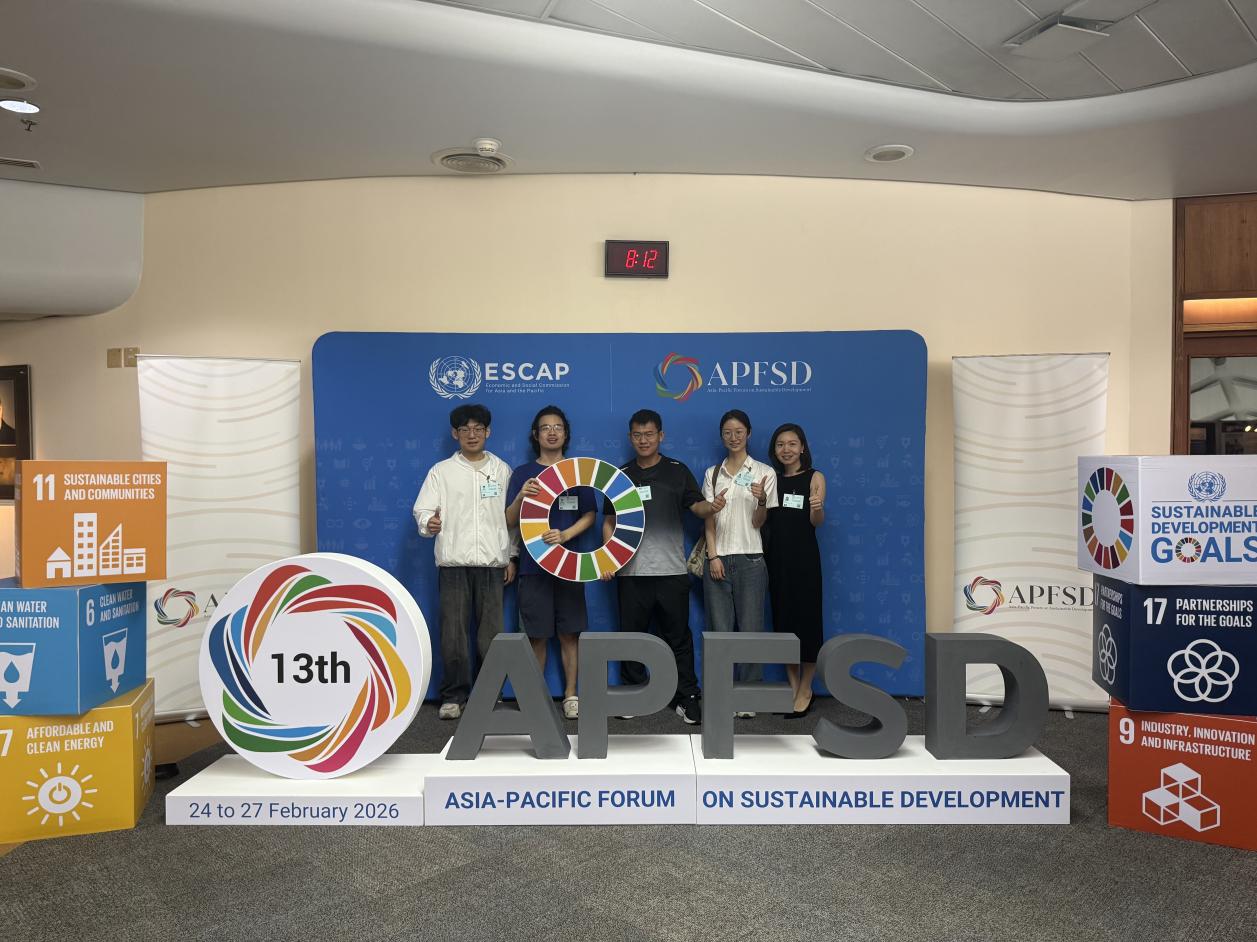
(Left to right in group photo: Xu Yuyan, Zhou Haohan, Li Zeyuan, Pan Xuanying, Dai Jing)
High-Level Dialogue: Synergizing Energy Transition and Green Growth
On the afternoon of February 24, ESCAP officially launched the “Energy Transition for Green Growth and Prosperity (ETGGP)” initiative during the High-Level Partnership Dialogue on Energy Transition for Green Growth and Prosperity. The initiative is built upon three mutually reinforcing pillars: first, strengthening analytical research to enhance the knowledge and evidence base for long-term planning across energy, economy, and industry; second, supporting regional grid interconnection through green power corridors; and third, mobilizing green finance by improving enabling conditions and building a pipeline of bankable projects to facilitate large-scale capital flows.
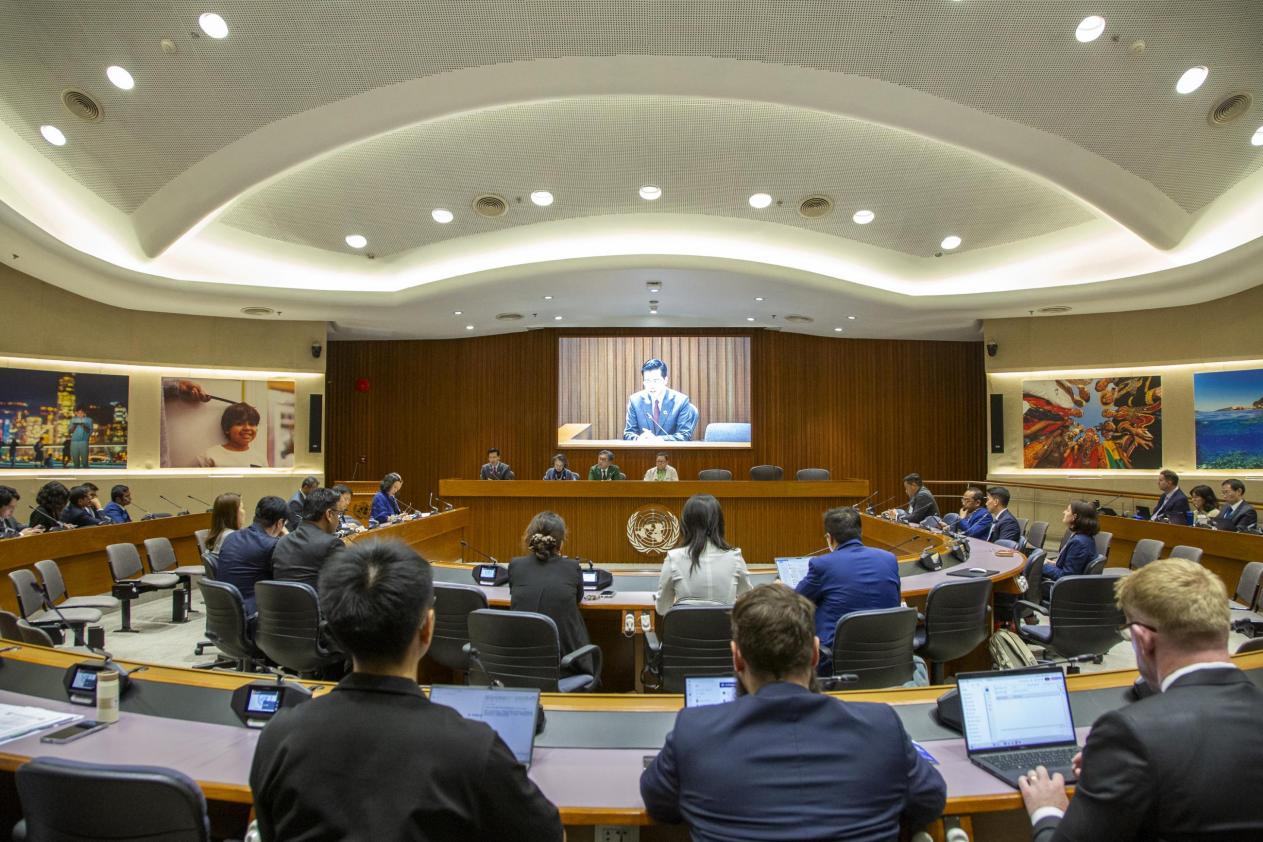
High-Level Partner Dialogue on Energy Transition for Green Growth and Prosperity
Following the launch, Associate Professor Dai Jing participated in a roundtable titled “Connecting Energy Transition and Green Growth,” moderated by ESCAP Deputy Executive Secretary Ms. Yang Lin. She introduced the bidirectional enabling relationship between artificial intelligence and energy systems, and elaborated on their coordinated development in supporting green and low-carbon energy transitions. Other distinguished guests participating in this roundtable forum included: Crecencio dos Santos, Head of the Electricity, Water, and Sanitation Office of the State Secretariat of Timor-Leste; Dato Ir. Ts. Abdul Razib Dawood, Executive Director of the ASEAN Centre for Energy; Yang Hongliang, Investment Solutions Manager in the Sector, Themes, and Finance Solutions Department of the Asian Infrastructure Investment Bank (AIIB); Prasoon Agarwal, Deputy Head of the Secretariat of the Clean Energy Ministerial; and Anastasia Nesvetailova (online), Head of the Macroeconomic and Development Policies Branch, Globalization and Development Strategies Division (GDS), United Nations Conference on Trade and Development (UNCTAD).
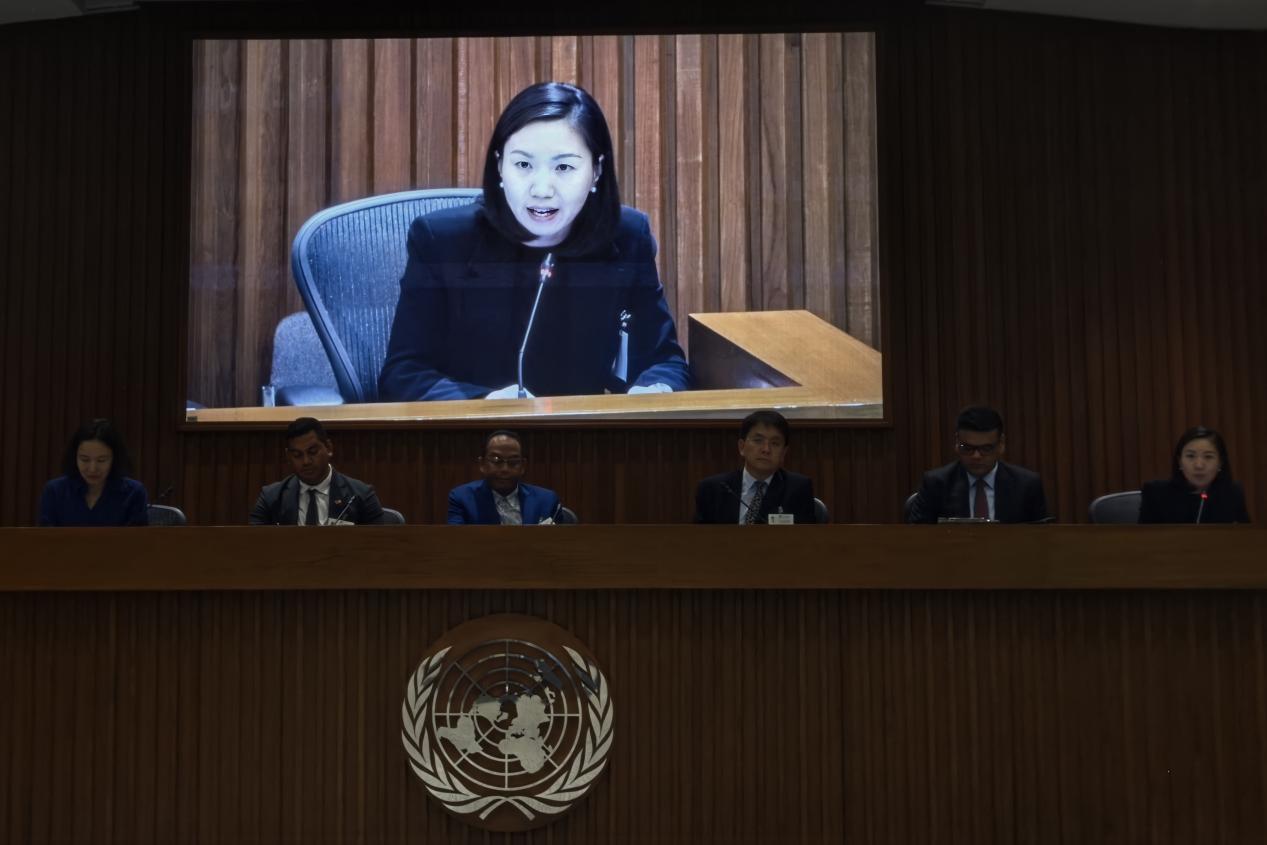
From left to right: Yang Lin, Crecencio dos Santos, Dato Ir. Ts. Abdul Razib Dawood, Yang Hongliang, Prasoon Agarwal, and Dai Jing
Academic Exhibition: Cutting-Edge Research Showcased at the UN Conference Centre
During the forum, the Tsinghua University exhibition booth became a focal point for academic exchange. Four students—Li Zeyuan, Zhou Haohan, Xu Yuyan, and Pan Xuanying—delivered detailed presentations on their respective research topics, including the optimal design of permanent magnet motors, research on superhydrophobic coatings, online monitoring of transmission lines, and collaborative optimization between data centers and power systems. They engaged in in-depth dialogue with experts and scholars from ASEAN countries and international organizations.
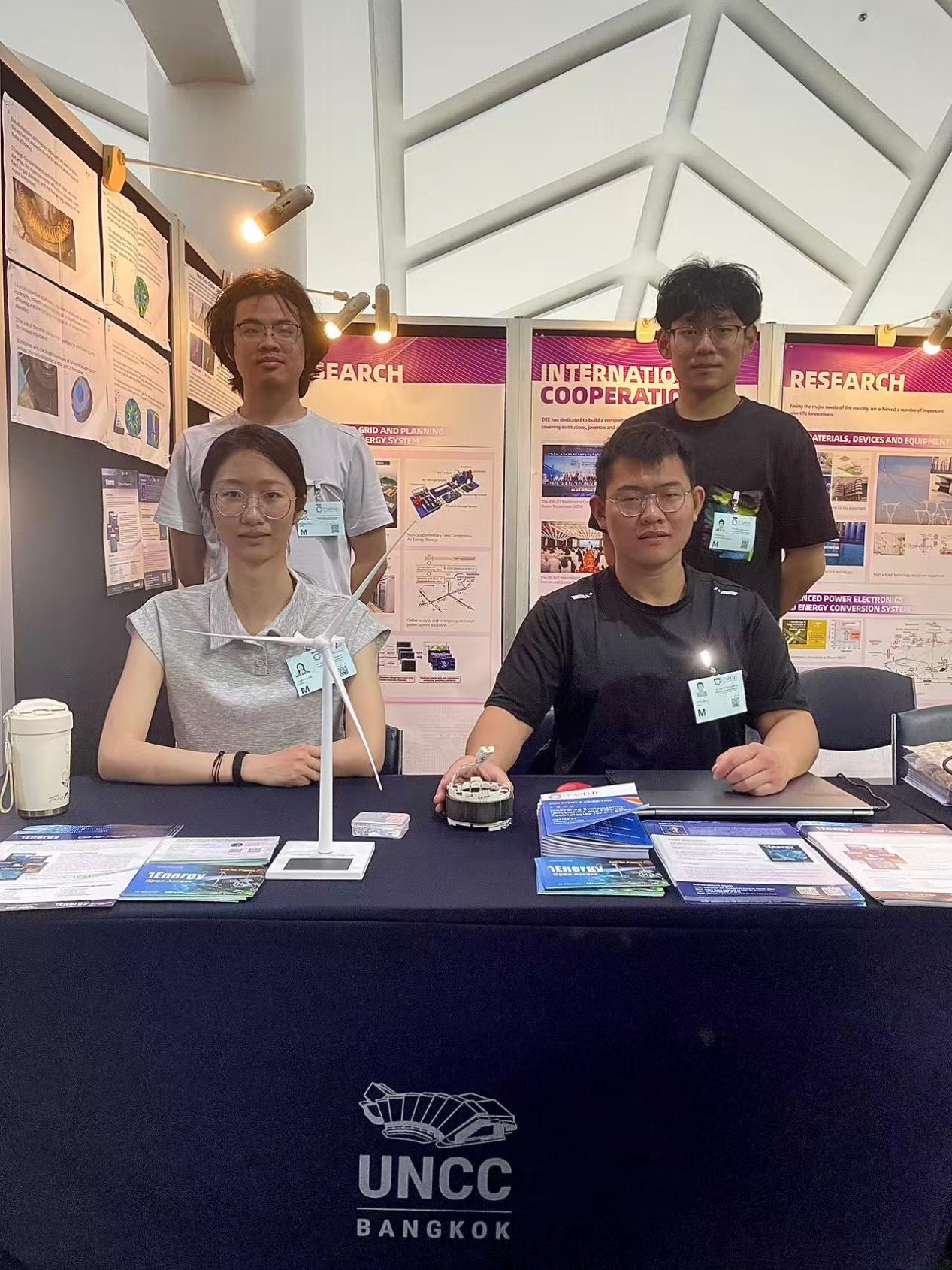
Department of Electrical Engineering Booth (from left to right, top to bottom: Zhou Haohan, Xu Yuyan, Pan Xuanying, Li Zeyuan)
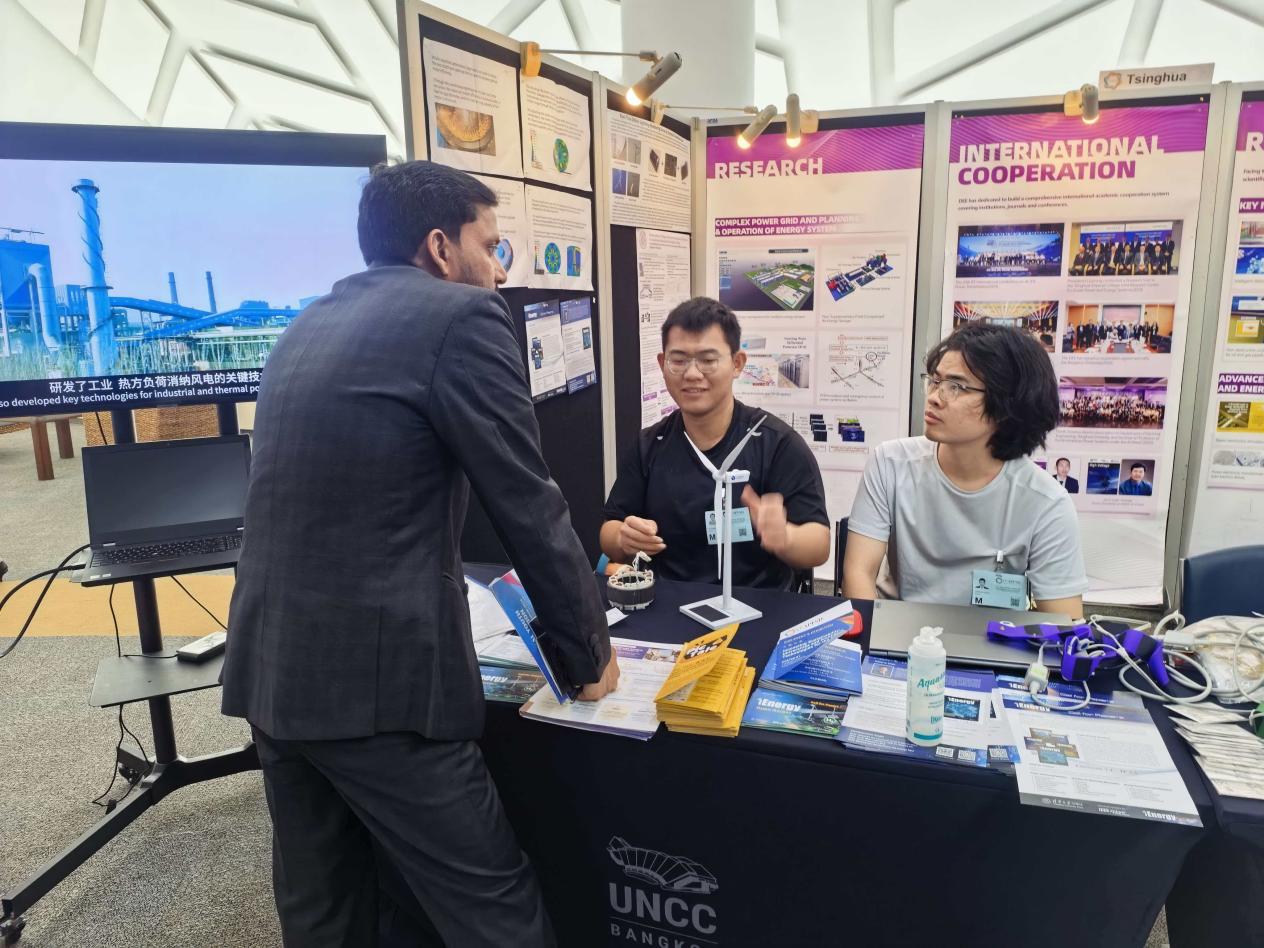
Explaining motor optimization to representatives (Li Zeyuan, Zhou Haohan)
Youth Dialogue: Asian Youth Exchange at Chulalongkorn University
On the afternoon of February 25, the delegation visited Chulalongkorn University to participate in the Asian Youth Dialogue co-hosted by Tsinghua University, Chulalongkorn University, and the University Consortium of Asia. Focusing on three major themes—reshaping education in an era of technological transformation, the practical impact of university research on Asia-Pacific development, and youth shaping trustworthy AI governance—students from the Department of Electrical Engineering engaged in in-depth exchanges with youth representatives from countries across the Asia-Pacific region. Li Zeyuan, head of the delegation, spoke on stage on behalf of the team, sharing the reflections and actions of Tsinghua students in practicing sustainable development concepts in the AI era.
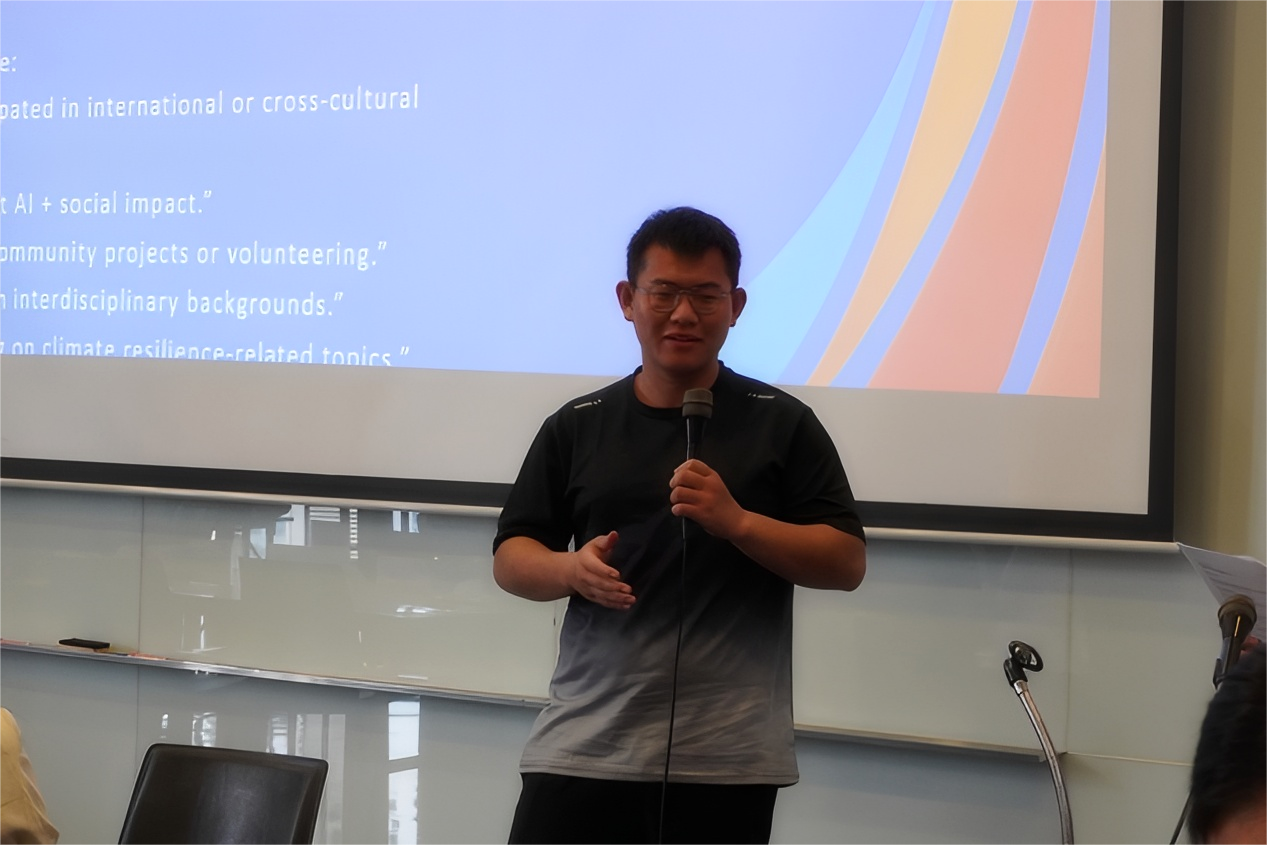
Team leader Li Zeyuan delivered a speech sharing reflections and actions of Tsinghua students in practicing sustainable development in the era of AI.
Main Forum Side Event: Universities and Frontier Technologies for Sustainable Development
At midday on February 26, the side event “Innovating Sustainability: Universities and Frontier Technologies for the SDGs,” co-hosted by Tsinghua University and the University Consortium of Asia, was successfully held. Tsinghua University Vice Secretary of the Party Committee Professor Guo Yong and UN Under-Secretary-General and ESCAP Executive Secretary Armida Salsiah Alisjahbana delivered remarks. As an important side event of this session of the APFSD, the activity attracted nearly 200 youth representatives, experts, and scholars to participate online and offline, engaging in in-depth discussions on empowering the Sustainable Development Goals with cutting-edge technologies, and became one of the most notably followed exchange events during the forum. Teacher Dai Jing introduced China's Computility-Electricity-Carbon Coordination technology and policy system, sharing pathways for the coordinated development of digital infrastructure and energy infrastructure in the AI era.
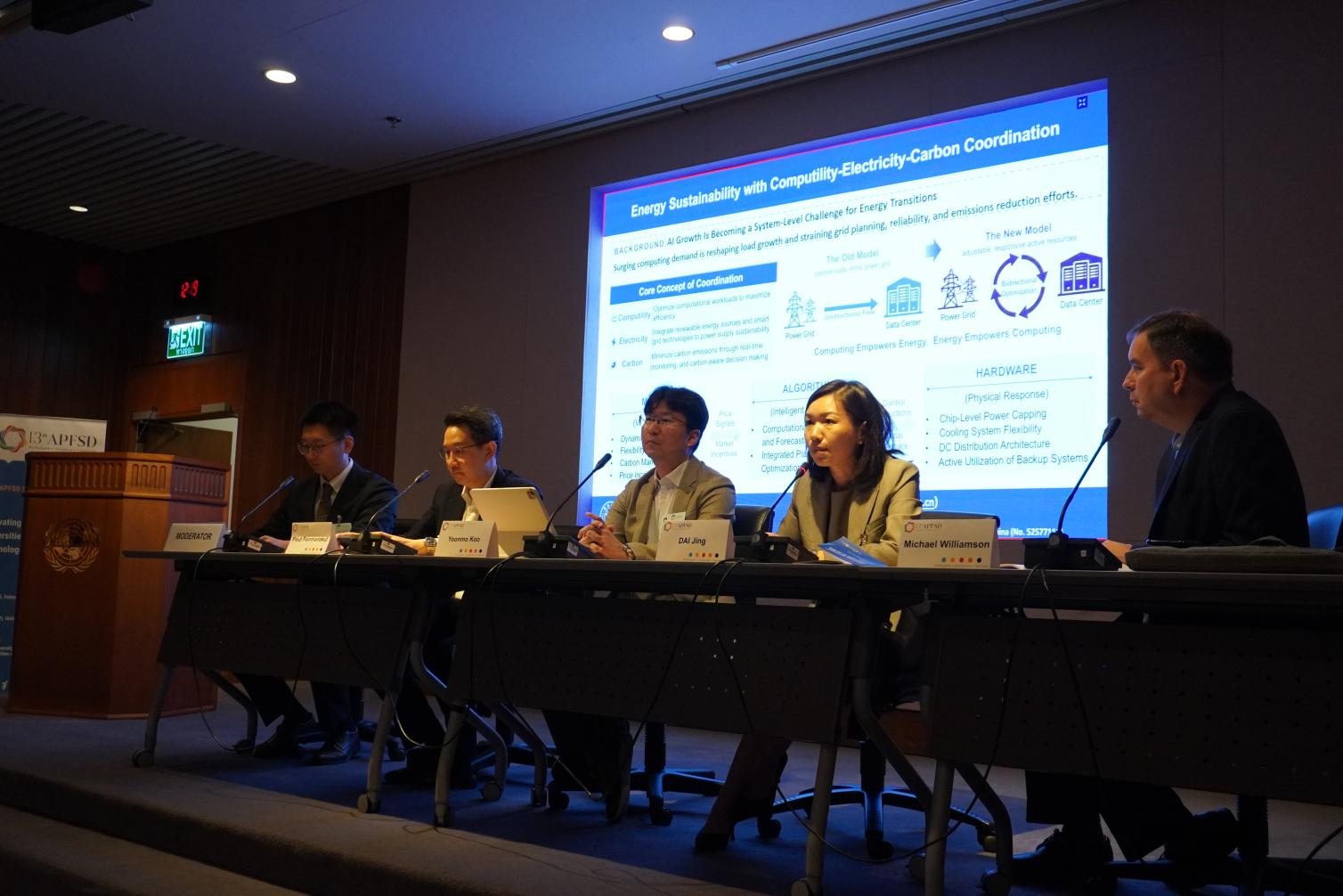
Dai Jing introduced China’s “Computility–Electricity–Carbon Coordination” framework and policy system


















 News & Events