Recently, the results of the undergraduate course teaching evaluation for the Spring Semester of the 2024–2025 academic year were released! Nearly 15,000 undergraduates participated in the evaluation, submitting over 130,000 valid questionnaires, providing comprehensive feedback for 1,464 courses and 2,284 instructors.
Four undergraduate courses from the Department of Electrical Engineering, “Electrical and Electronic Technology,” “Circuit Theory (English),” “Power System Analysis and Control,” and “Electric Drive and Control”, ranked in the top 5% university-wide. In addition, in the highly regarded indicator “Student Learning Gains,” Professor Xiao Xi’s course “Electric Drive and Control” also ranked in the top 5%, with students commenting, “I have gained a lot from this course.”
Department |
Instructor |
Course Code |
Course Name |
Teaching Evaluation Result |
Electrical Engineering |
Liu Yingyan |
20220044 |
Electrical and Electronic Technology |
Top 5% |
Electrical Engineering |
Wu Jinpeng |
20220424 |
Circuit Theory (English) |
Top 5% |
Electrical Engineering |
Zhang Ning |
30220562 |
Power System Analysis and Control |
Top 5% |
Electrical Engineering |
Xiao Xi |
40220732 |
Electric Drive and Control |
Top 5% |
Course Highlights
Course Name: Electrical and Electronic Technology (20220044)
Instructor: Liu Yingyan
Course Overview: This foundational technical course is designed for non-electric engineering undergraduates across the university. The curriculum is divided into five parts: 1) Basic knowledge of circuit theory; 2) Basic knowledge of electrical equipment and control; 3) Fundamentals of analog electronics; 4) Fundamentals of digital electronics; 5) Six offline laboratory experiments and one simulation experiment. The course consists of 69 class hours, totaling 4 credits. Course Features: Comprehensive content across multiple domains; blended online and offline teaching; emphasis on connecting theory with practice; high-quality course materials; remarkable achievements in integrating ideological and political education. The instructor and course were recognized as Tsinghua University’s 2024 Model Instructor and Model Course in ideological and political education.

Photo: Liu Yingyan with students from the School of Aeronautics Pilot Class
Course Name: Circuit Theory (English) (20220424)
Instructor: Wu Jinpeng
Course Overview: Circuit Theory is a fundamental course for all electrical majors, forming the knowledge base for subsequent core and specialized courses. It is considered a “flagship course” for undergraduate students in electrical disciplines.
The Tsinghua University Circuit Theory teaching team has a long-standing foundation and rich teaching experience, consistently emphasizing the inheritance of excellent teaching culture. Under the guidance of distinguished instructors Lu Wenjuan, Yu Xinjie, Zhu Guiping, and others, Professor Wu Jinpeng offered an English-taught course in Spring 2025 based on the high-quality Chinese course framework, supporting the development of an internationalized curriculum for electrical engineering. The fully English instruction created an immersive international learning environment highly appreciated by students.
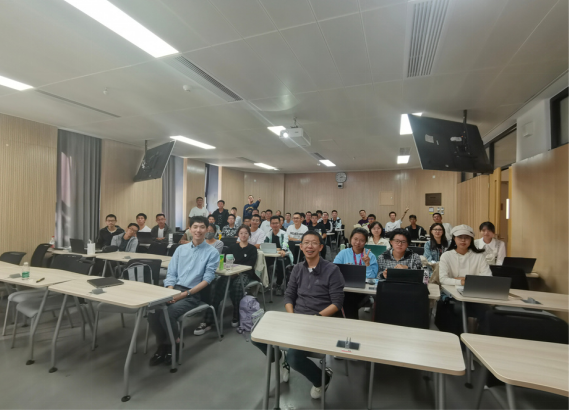
Photo: Yu Xinjie, Wu Jinpeng, and students
Course Name: Power System Analysis and Control (30220562)
Instructor: Zhang Ning
Course Overview: This course is an advanced professional core course based on the Department of Electrical Engineering’s undergraduate course “Power System Analysis.” Course projects are designed around real-world power system operation scenarios, enabling students to perform steady-state and transient calculations and analysis based on lectures and interactive guidance. Students acquire skills in power system analysis, proficient use of software like MATLAB and Python, and mainstream electrical analysis tools. The course adopts small-group seminar formats, emphasizing research orientation and personalized instruction. Cross-class activities for major assignments encourage exchange of ideas and innovative approaches, broadening students’ academic horizons. The course tightly integrates theory with practice, promotes idea exchange, and develops teamwork and communication skills.
Professor Zhang Ning fosters “discussion enthusiasm” through open spaces, “personalized teaching” through attentive guidance, and “intrinsic motivation” through a relaxed environment, building a student-centered and innovation-encouraging teaching process that makes learning and exploration proactive, engaging, and effective.
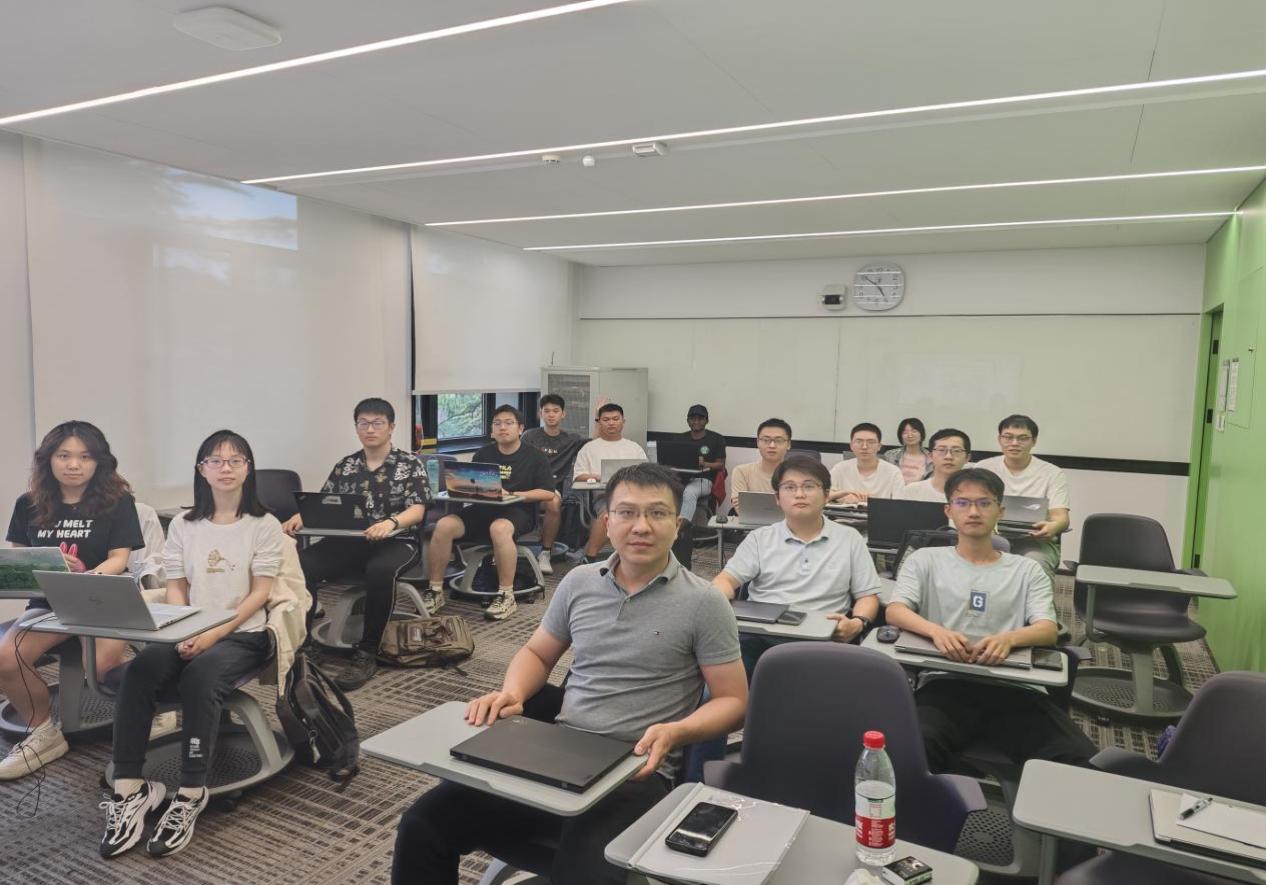
Photo: Zhang Ning in professional course classroom
Course Name: Electric Drive and Control (40220732)
Instructor: Xiao Xi
Course Overview: Electric drive refers to the use of electric motors to drive mechanical motion in production machinery. It is widely applied globally, with over 50% of total electricity converted to mechanical energy via electric motors; in China, industrial motors consume over 60% of annual generated electricity. Motor drive technology is core and common to industries such as new energy vehicles, robotics, CNC machine tools, semiconductor equipment, and aerospace. Mastering electric drive knowledge is essential for undergraduate electrical engineering students.
The course starts with DC motor control and focuses on AC motor variable-frequency speed regulation, covering fundamental principles and key knowledge, including DC motor dual-loop speed control design, asynchronous motor variable-frequency control, dynamic mathematical models of asynchronous and synchronous motors, and vector control methods.
The course integrates teaching with research, introduces cutting-edge developments in electric drive technology, and enhances student interest. It includes a typical AC electric drive system simulation case and an experimental platform built with departmental support, strengthening hands-on practical skills. Innovative assessment methods combine case-based simulation analysis with experimental interactive evaluation, replacing traditional exam-based grading to assess applied knowledge and problem-solving abilities.
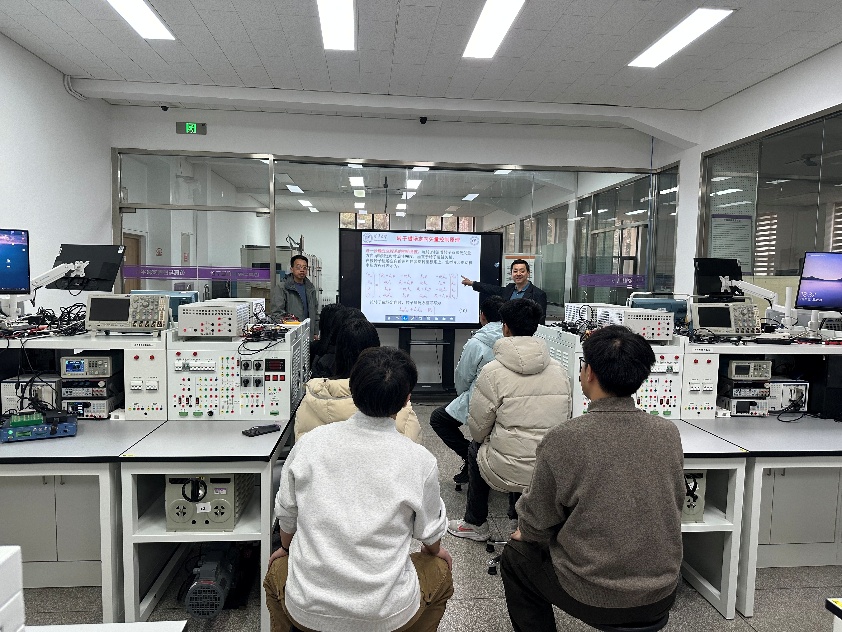
Photo: Xiao Xi teaching students

















 News & Events