Course Title
Optimal Decision-Making for New Power Systems
Course Description
With the large-scale integration of renewable energy and the widespread application of power electronics technologies, power systems are gradually evolving into new power systems dominated by inverter-based resources (IBRs). Their operating characteristics, stability mechanisms, and decision-making methods are undergoing profound changes. This course aims to introduce students to the fundamental theories and cutting-edge methods of optimal decision-making for new power systems. It explains how uncertainty, dynamic security, and stability constraints can be incorporated into planning, operation, and control, and establishes a systematic decision-making framework that spans multiple time scales and integrates steady-state operation with dynamic performance.
The course will be taught bilingually in Chinese and English and is intended for postgraduate students interested in the planning, operation, and control of new power systems. Focusing on the key challenges arising from the high penetration of inverter-based resources, the course covers multi-timescale decision coordination; uncertainty quantification and risk-aware operation; dynamic security assessment; stability-constrained scheduling and optimization; coordinated optimization of device control and system operation; and decision-focused machine learning. Upon completion of the course, students will gain a deeper understanding of the relationship between optimal power system decision-making and stability, laying a foundation for research on the secure and efficient operation of new power systems and intelligent decision-making.
Instructor
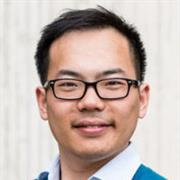
Fei Teng, Reader in Intelligent Energy Systems in the Department of Electrical and Electronic Engineering at Imperial College London; UK Director of the Imperial College London–Tsinghua University Joint Research Center for Smart Energy and Power; Senior Visiting Scholar at Tsinghua University.
Dr. Fei Teng is currently a Reader in Intelligent Energy Systems in the Department of Electrical and Electronic Engineering at Imperial College London, UK Director of the Imperial College London–Tsinghua University Joint Research Center for Smart Energy and Power, and Director of Education at the Energy Futures Lab of Imperial College London. He has previously held academic or visiting positions at KTH Royal Institute of Technology in Sweden, Mines Paris – PSL in France, The Hong Kong Polytechnic University, and South China University of Technology.
Dr. Teng's research focuses primarily on the planning, operation, and control of intelligent power systems, with particular emphasis on power system stability and optimal decision-making under high penetration of inverter-based resources, as well as the cybersecurity and resilience of digital power grids. He has led and participated in numerous international collaborative research projects and achieved a series of research advances in smart grids, energy system optimization, and advanced control.
Dr. Teng currently serves as an Associate Editor of IEEE Transactions on Power Systems, a journal published by the Institute of Electrical and Electronics Engineers (IEEE). He also holds academic positions on relevant IEEE international technical committees and actively participates in international academic exchanges and cooperation.
Dr. Teng has received numerous honors, including the Royal Society Kan Tong Po Fellowship, the IEEE Young Scientist Award, and Best Paper Awards from IEEE Transactions on Power Systems, IEEE Transactions on Power Electronics, and the IEEE PES General Meeting. Doctoral students under his supervision have received Best PhD Thesis Awards from IEEE PES and IEEE IAS. In education, he has long been involved in undergraduate and postgraduate teaching at Imperial College London and has participated in curriculum development and academic administration for interdisciplinary master's programs in energy.
Course Content
1. Transition Towards IBR-Dominated Power Systems
1) Net-zero transition and power system evolution
2) Characteristics of IBR-dominated systems
3) Challenges and opportunities to operate IBR-dominated systems
2. Multi-Timescale Decision-Making in Power Systems
1) Introduction of system planning, scheduling, dispatch and control
2) Coordination of hierarchical decision making from years to seconds
3. Uncertainty Quantification and Risk-Aware Operation
1) Sources and modelling of uncertainty
2) Probabilistic forecasting and scenario generation
3) Stochastic optimisation for risk-informed operational decisions
4. Dynamic-Aware Decision Making
1) System stability classification and assessment
2) Modelling approaches for system frequency stability
3) Coupling of steady state and dynamics
5. Stability-Constrained System and Asset Optimisation
1) Stability-constrained scheduling and dispatch
2) Co-optimization of steady-state operation with device control
3) Concept of Software-defined Grid
6. Decision-Focused Learning for Power System Operation
1) From prediction to decision
2) Learning through optimisation layers
3) Decision-focused dispatch
Course Information
Target Participants: Postgraduate students (applications from postgraduate students outside Tsinghua University are welcome)
Language of Instruction: Chinese and English
Assessment: Coursework; 2 credits
Course Schedule and Venue
Course Schedule:
November 16–19 and November 23–26, 2026, 8:50 a.m.–12:15 p.m.
Venue:
West Main Building, Tsinghua University
(The specific classroom will be announced upon successful registration.)
How to Register
Scan the QR code below to register (registration deadline: 11:59 p.m. on November 10).

Teaching Assistants:
Yang Min, ym24@mails.tsinghua.edu.cn
Lan Xinyao, xinyao.lan.1998@gmail.com


















 News & Events