Recently, fixed-frequency grid-forming and active power control technologies independently developed by Professor Min Yong's team at the Department of Electrical Engineering of Tsinghua University and the State Key Laboratory of Operation and Control of New Power Systems have been successfully deployed at three locations: Daguan Island in Qingdao, Shandong Province; Heerhongde in Hulunbuir, Inner Mongolia; and Hongde Village in Wuzhong, Ningxia. Three demonstration projects of 100% renewable-energy microgrids have been completed in succession, providing highly reliable green electricity to more than 10,000 residents and reducing carbon dioxide emissions by over 1,750 tonnes annually. These achievements offer an entirely new technical solution to electricity supply challenges in remote areas at the ends of power grids, including islands, pastoral regions, and rural communities. The three demonstration projects were implemented in phases along a technical pathway progressing from off-grid operation in a single distribution area, to grid-connected and off-grid operation in a single distribution area, and finally to coordinated operation across multiple distribution areas. Together, they have validated the entire process, from original theoretical research and equipment development to engineering implementation.
Original and Disruptive Technologies for Power Systems with High Shares of Renewable Energy and Power Electronics
With the large-scale integration of renewable energy, the power generation structure of power systems is shifting from one dominated by synchronous generators to one dominated by converter-interfaced power sources. This transition is characterized by high shares of renewable energy and power electronic equipment, commonly referred to as the “dual-high” characteristics. System inertia continues to decline, while disturbances under the traditional active-power–frequency coupling mechanism cause increasingly pronounced frequency and phase-angle dynamics. Complex interactions among massive numbers of devices further amplify the risk of system instability, posing fundamental challenges to the grid operation and control framework that has been in use for more than a century. Mainstream grid-forming technologies, represented by virtual synchronous machines, still follow the conventional power system framework. They not only inherit inherent problems involving frequency and power-angle stability, but also face increasingly complex stability challenges as the number of grid-forming power sources grows. Consequently, they are unable to fully meet the operational requirements of dual-high power systems.
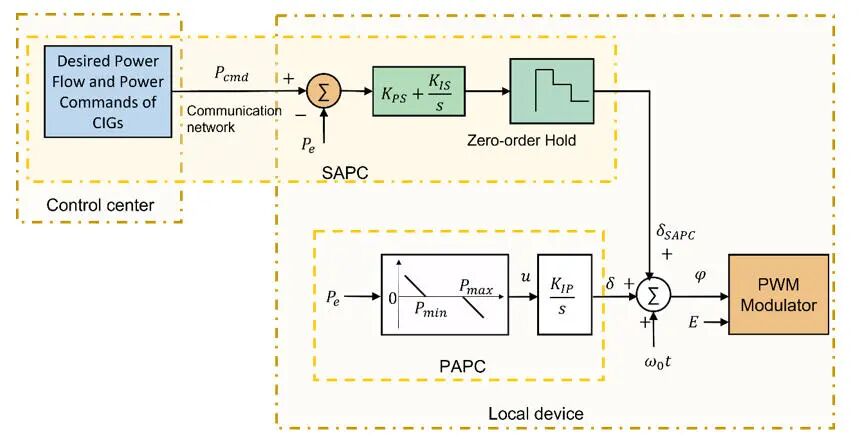
Schematic Diagram of Fixed-Frequency Grid-Forming and Active Power Control Technologies
Professor Min Yong's team at Tsinghua University has proposed original fixed-frequency grid-forming and active power control technologies. Breaking away from the conventional mindset of emulating synchronous machine characteristics, the technologies control converter-interfaced power sources as ideal constant-voltage, constant-frequency sources. These sources operate in an open-loop manner within their equipment capabilities, dynamically constraining power imbalances within the equipment itself and decoupling equipment dynamics from system dynamics. This eliminates frequency and power-angle dynamics as well as the risk of wideband oscillations at their source, creating modular grid-forming power sources characterized by high internal cohesion and low coupling. At the system level, a fixed-frequency active power control framework compatible with the existing Automatic Generation Control (AGC) architecture is established. The team has also developed the first complete set of fixed-frequency grid-forming energy storage equipment, featuring three core functions: fixed-frequency voltage source establishment, support with effectively infinite inertia, and black start. The equipment is compatible with products from major manufacturers without requiring any modifications to converter hardware. Leveraging its modular architecture characterized by high internal cohesion and low coupling, fixed-frequency grid-forming energy storage can be deployed in hierarchical configurations, connected on a plug-and-play basis, and flexibly networked. This provides the equipment foundation for large-scale demonstration projects involving off-grid operation in a single distribution area, grid-connected and off-grid operation in a single distribution area, and coordinated operation across multiple distribution areas.
Off-Grid Demonstration in a Single Distribution Area: Bringing 100% Renewable Electricity to an Island in the Yellow Sea
Daguan Island is located in Laoshan Bay, Qingdao. Covering an area of 0.46 square kilometers, the island has long been without connection to the main power grid, and its electricity supply has been unreliable. In 2024, Qingdao Yunlu Advanced Materials Technology Co., Ltd. invested in the construction of a 50 kW centralized photovoltaic system and five 10 kW wind turbines on the island. Tsinghua University, in collaboration with State Grid Qingdao Power Supply Company and CYG Sunri, deployed an integrated fixed-frequency grid-forming energy storage cabinet rated at 125 kW/261 kWh near the wind and solar power sources. Completed and commissioned in July 2026, the project established an off-grid microgrid integrating wind, solar, and energy storage through a 400 V low-voltage AC network, providing the entire island with a round-the-clock supply of 100% renewable electricity.
In this system, fixed-frequency grid-forming energy storage serves as the main power source for the island's microgrid. Operating in a constant-voltage, constant-frequency control mode, it responds in real time to power deficits and surpluses, automatically charging and discharging to maintain power balance. It also provides active support amid sharp fluctuations in renewable energy output and loads, maintaining a constant frequency throughout the system without dynamic frequency variations. On July 29, 2026, the project team conducted a dedicated test of system frequency stability. During the test, photovoltaic output fluctuated substantially between 9.98 and 20.96 kW, wind turbine output between 0.54 and 10.06 kW, and energy storage output between -11.10 and 10.15 kW. Despite these fluctuations, the system frequency remained constant, with a variation of only 0.000002 Hz. (The standard deviation of frequency fluctuations in current power grids is generally above 0.02 Hz, while national standards permit a frequency deviation of ±0.2 Hz.) This project is the first demonstration of a fixed-frequency grid-forming microgrid providing a reliable electricity supply to an island entirely through renewable energy. It has explored a new pathway for coordinating the low-carbon energy transition of islands with the provision of reliable electricity for people's livelihoods.
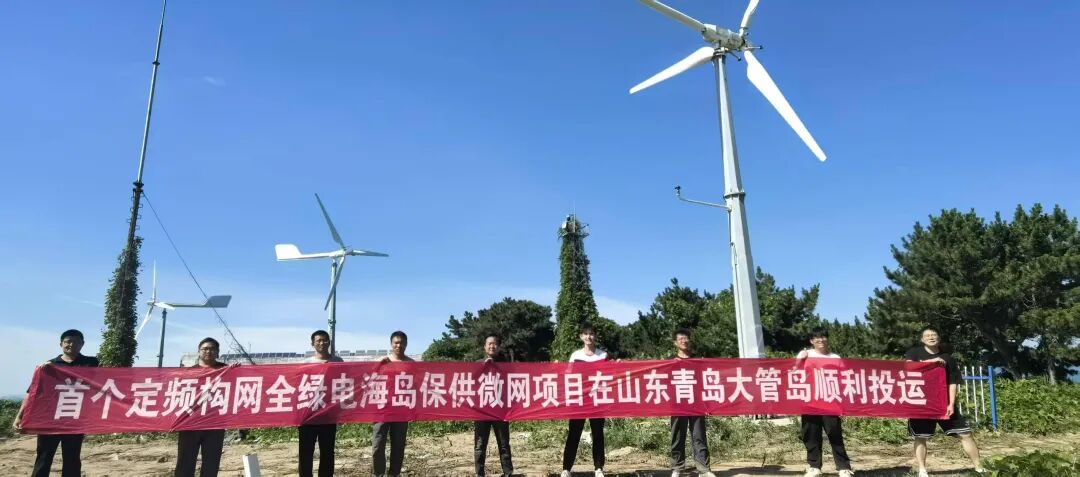
Commissioning of the Demonstration Project for a Fixed-Frequency Grid-Forming Microgrid Providing Reliable Electricity to Remote Areas of Daguan Island
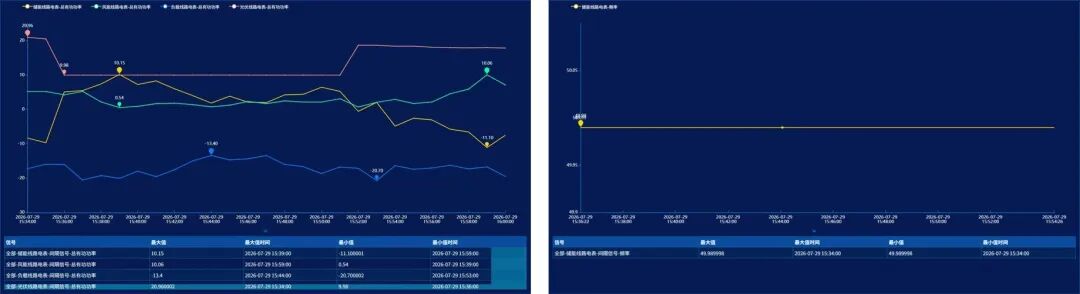
Special Test of Frequency Stability on Daguan Island: Sharp Fluctuations in Wind, Solar, Storage, and Load Power (Left) and Constant System Frequency (Right)
Grid-Connected and Off-Grid Demonstration in a Single Distribution Area: Bringing Reliable Electricity to a Remote Border Pastoral Community
Heerhongde Resettlement Village is located in the heart of the Hulunbuir Grassland, adjacent to the China-Russia border. It is a typical remote pastoral area at the end of the power grid, served by a weak electricity network. During the winter, severe snowstorms and strong winds frequently cause line failures and significant frequency fluctuations, leaving herders struggling to maintain their daily lives and production activities when power outages occur. The project involves the construction of a series-parallel fixed-frequency grid-forming energy storage system rated at 100 kW/200 kWh. Through flexible interconnection, one end is connected to the 35 kV main power grid and the other to the 10 kV distribution network. Under normal operating conditions, the system provides active support to both grids simultaneously. In the event of disconnection from either side or isolated operation, the fixed-frequency grid-forming energy storage system can provide loads with constant-frequency, constant-voltage electricity for at least three days, forming a local multi-energy complementary power system integrating wind power, photovoltaics, and energy storage. The project is expected to reduce carbon dioxide emissions by 347 tonnes annually. It ensures a stable electricity supply for local herders without placing any additional ecological burden on the grassland. Since its commissioning, the project has been covered by numerous media outlets, including People's Daily, Xinhua News Agency, Guangming Daily, and Inner Mongolia Television's News Simulcast, with cumulative online readership exceeding 100,000.
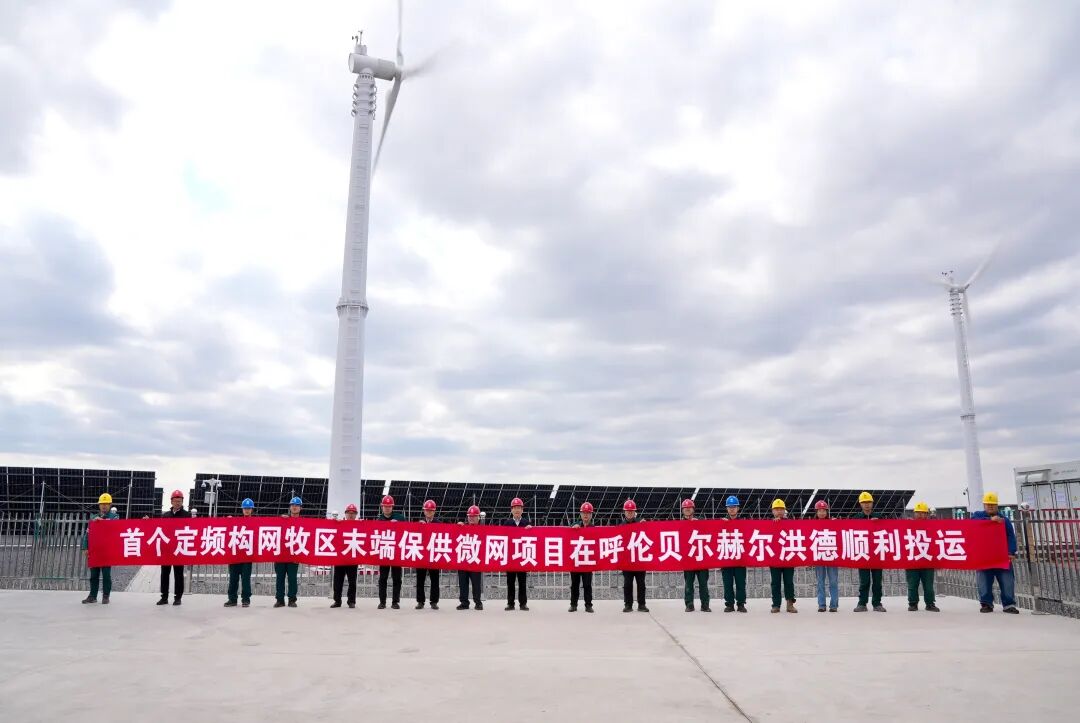
Commissioning of the Demonstration Project for a Fixed-Frequency Grid-Forming Microgrid Providing Reliable Electricity to Remote Areas of Heerhongde Pastoral Community
Coordinated Demonstration Across Multiple Distribution Areas: Building a Model 100% Renewable-Energy Resettlement Village
Hongde Village is located in Hongsibao District, Wuzhong, Ningxia. It is the largest relocation and resettlement area for ecological migrants in China and a demonstration village for Fujian-Ningxia cooperation. In June 2020, General Secretary Xi Jinping made Hongde Village the first stop of his inspection tour of Ningxia, leaving the earnest message that “a better life still lies ahead.” To address power quality issues in Hongde Village and the Fuxiang area of Hongsibao, including voltage exceeding upper limits during periods of high midday photovoltaic output and three-phase current imbalance in distribution transformer areas, as well as challenges such as substantial load fluctuations, large peak-to-valley differences, and difficulties in accommodating electricity generated by poverty-alleviation photovoltaic power stations, the project deployed three fixed-frequency grid-forming energy storage systems, each rated at 135 kW/257 kWh. Combined with low-voltage interconnection and networking technology, the systems enable independent voltage stabilization in different zones and flexible allocation of resources across distribution areas.
Among these systems, one fixed-frequency energy storage cabinet was independently installed in distribution transformer area No. 10 in Hongde Village. It is responsible for smoothing load fluctuations within the area, compensating for reactive power, and stabilizing low-voltage supply, thereby meeting the operational requirements for independent voltage regulation and peak shaving and valley filling in a single distribution area. One cabinet was also installed in each of the Fuxiang No. 02 and No. 03 box-type transformer areas. The two cabinets are connected through low-voltage interconnection cables to form a coordinated system. Operating as shared resources, they flexibly allocate capacity according to real-time load changes and power supply pressures in the two areas, enabling complementary power supply across distribution areas, balanced load allocation, and maximum utilization of energy storage capacity. The project has effectively improved the reliability of low-voltage distribution networks and the local consumption of renewable energy, establishing a demonstration model of a resettlement village powered entirely by renewable electricity.
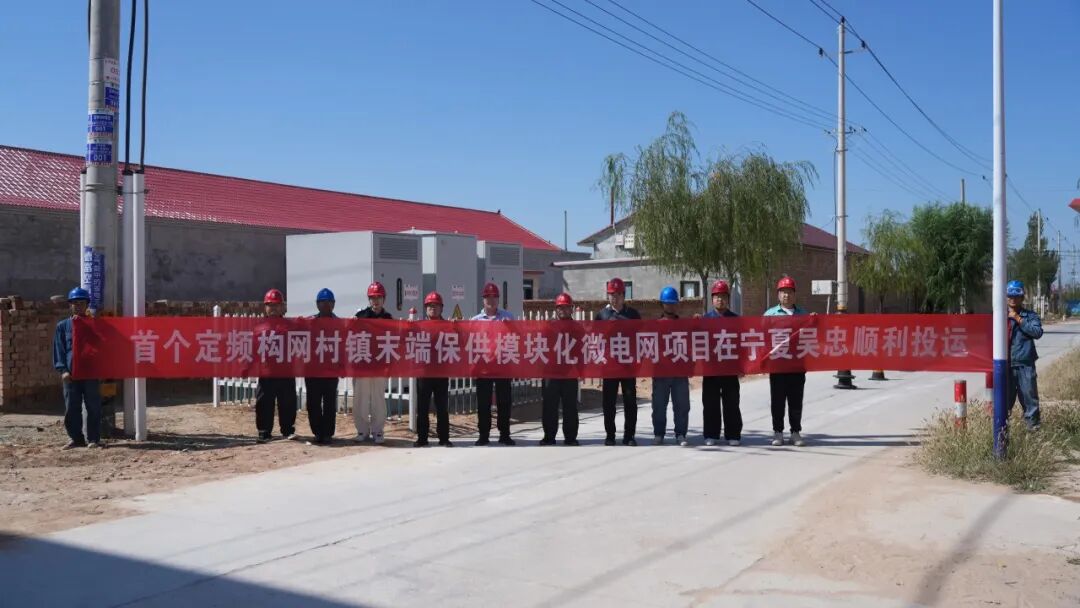
Commissioning of the Modular Microgrid Project for Reliable Electricity Supply to Remote Rural Areas in Wuzhong
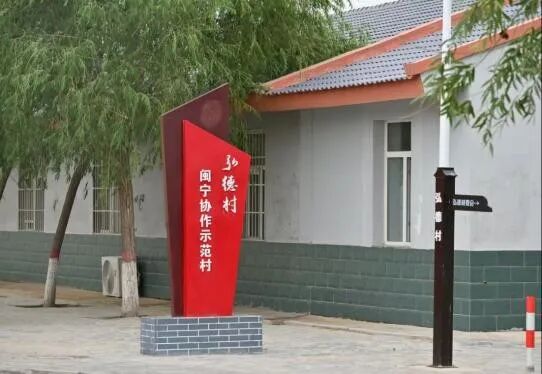
Hongde Village: A Demonstration Village for Fujian-Ningxia Cooperation
The three demonstration projects were arranged in phases according to the progression from off-grid operation in a single distribution area, to grid-connected and off-grid operation in a single distribution area, and finally to coordinated operation across multiple distribution areas. Together, they cover the major application scenarios of fixed-frequency grid-forming technology. Two of the demonstration projects are located in China's ethnic minority autonomous regions, where green electricity supports industrial development and improvements in people's livelihoods in border ethnic communities. They also provide solid energy security for promoting ethnic unity and progress, developing border areas and improving local livelihoods, and advancing comprehensive rural revitalization.
From Microgrids at the Ends of Power Grids to Main Grids and Direct Green Electricity Supply
Compared with conventional grid-forming solutions, fixed-frequency grid-forming technology offers three major advantages. First, it provides superior stability. In grid-connected scenarios, fixed-frequency equipment can strengthen end-of-grid networks and facilitate renewable energy integration. Microgrid operation generally requires no separate stability verification for different operating modes; the primary consideration is simply the balance between electricity supply and demand. Second, it offers strong adaptability. It can flexibly accommodate different grid topologies, while transitions between grid-connected and off-grid operation, as well as the networking and partitioning of multiple microgrids, can all be completed seamlessly and without impact. Third, it is more economical. Compared with conventional grid-forming solutions, it does not increase energy storage costs. System operation is no longer constrained by stability issues, and the utilization rate of power transmission and transformation equipment is improved.
Going forward, the team will promote the application of fixed-frequency grid-forming technology beyond the ends of power grids and into a broader range of scenarios. On the one hand, in large-grid scenarios such as large-scale renewable energy bases in deserts, the Gobi, and other arid areas, regional power systems transmitting electricity through flexible HVDC systems, and independent energy storage power stations, fixed-frequency control offers significant advantages in improving system stability. When the proportion of fixed-frequency equipment capacity is not yet sufficient to dominate system dynamics, system frequency will continue to follow the existing operating mechanism. Nevertheless, fixed-frequency control can significantly improve system stability without adding any hardware costs. As the capacity and proportion of fixed-frequency equipment increase, adaptive parameter adjustment technology can be employed to achieve fixed-frequency operation throughout the system naturally, ensuring a smooth transition from the conventional power-frequency control framework to a fixed-frequency active power control framework and providing strong support for the secure transmission of renewable energy on a large scale. On the other hand, in emerging scenarios such as industrial parks with direct green electricity supply and zero-carbon industrial parks, modular wind-solar-storage microgrids built on fixed-frequency grid-forming technology can enable flexible networking of energy sources, grids, loads, and storage, while ensuring stable operation across all time scales. This provides a highly reliable and replicable technical foundation for direct green electricity supply projects.
From an island off the coast of the Yellow Sea without access to the main power grid, to a border pastoral community on the Hulunbuir Grassland, and then to a resettlement village at the eastern foothills of the Helan Mountains, fixed-frequency grid-forming technology is accelerating the development of a new power system characterized by fixed frequency and strong stability, thanks to its originality, disruptive potential, and replicability. It provides solid technical support for China's green and low-carbon energy transition and the achievement of its dual-carbon goals.


















 News & Events