Recently, the research group led by Associate Professor Fu Yangyang from the Department of Electrical Engineering has made significant progress in the fundamental theory of microscale discharge plasma. The results, titled Field-Emission-Induced Terahertz Plasma Waves and Instabilities in Microdischarges, were published in the renowned physics journal Physical Review Letters. The first author is Chen Jiandong, a 2022 PhD student from the department, and Associate Professor Fu Yangyang is the sole corresponding author. Other collaborators include Lin Chubin (PhD student, Class of 2023), Associate Professor Peng Zhang from the University of Michigan, Ann Arbor, Professor John P. Verboncoeur from Michigan State University, and Professor Lay Kee Ang from Singapore University of Technology and Design.
Microplasma refers to plasma confined within a sub-millimeter-scale spatial region. Compared with conventional plasma, the reduced spatial scale endows microplasma with unique physical properties such as ultra-high electron density and stability under high pressure. Its characteristic frequency lies in the terahertz to infrared range, making it a highly promising miniaturized terahertz source. Although in the field of vacuum electronic devices, terahertz signals can be generated through micro-gap virtual cathode oscillations driven by thermionic or photoelectric emission, vacuum devices driven by field emission often struggle to achieve stable self-sustained oscillations. In 2024, Fu Yangyang’s group revealed the space-charge effects and self-oscillation mechanisms induced by field emission [Plasma Sources Sci. Technol. 33, 045001 (2024)], theoretically clarifying the role of ions in promoting instability in microplasma and laying the foundation for terahertz source research.
Recently, the group has made another breakthrough: they reported that microplasma can excite two distinct yet coexisting terahertz waves with different physical mechanisms. Combining first-principles particle simulations, plasma fluid theory, and perturbation analysis, they mathematically revealed the physical origin of the dual terahertz waves.
The team constructed a fully kinetic particle simulation model incorporating cathode field emission, anode secondary electron multiplication (Multipactor), and electron collisions, as shown in Figure 1. To accurately describe ultrafast physical processes at the picosecond scale in microdischarges, femtosecond-level distributed electron emission delays were introduced in the simulation. The study found that two types of terahertz waves exist in the system: the first type is excited in the cathode sheath with frequencies up to hundreds of THz, originating from intermittent field emission caused by space-charge effects; the second type is excited in the main plasma region with frequencies of tens of THz, originating from two-stream instability formed between cathode-emitted electrons and anode secondary electrons.
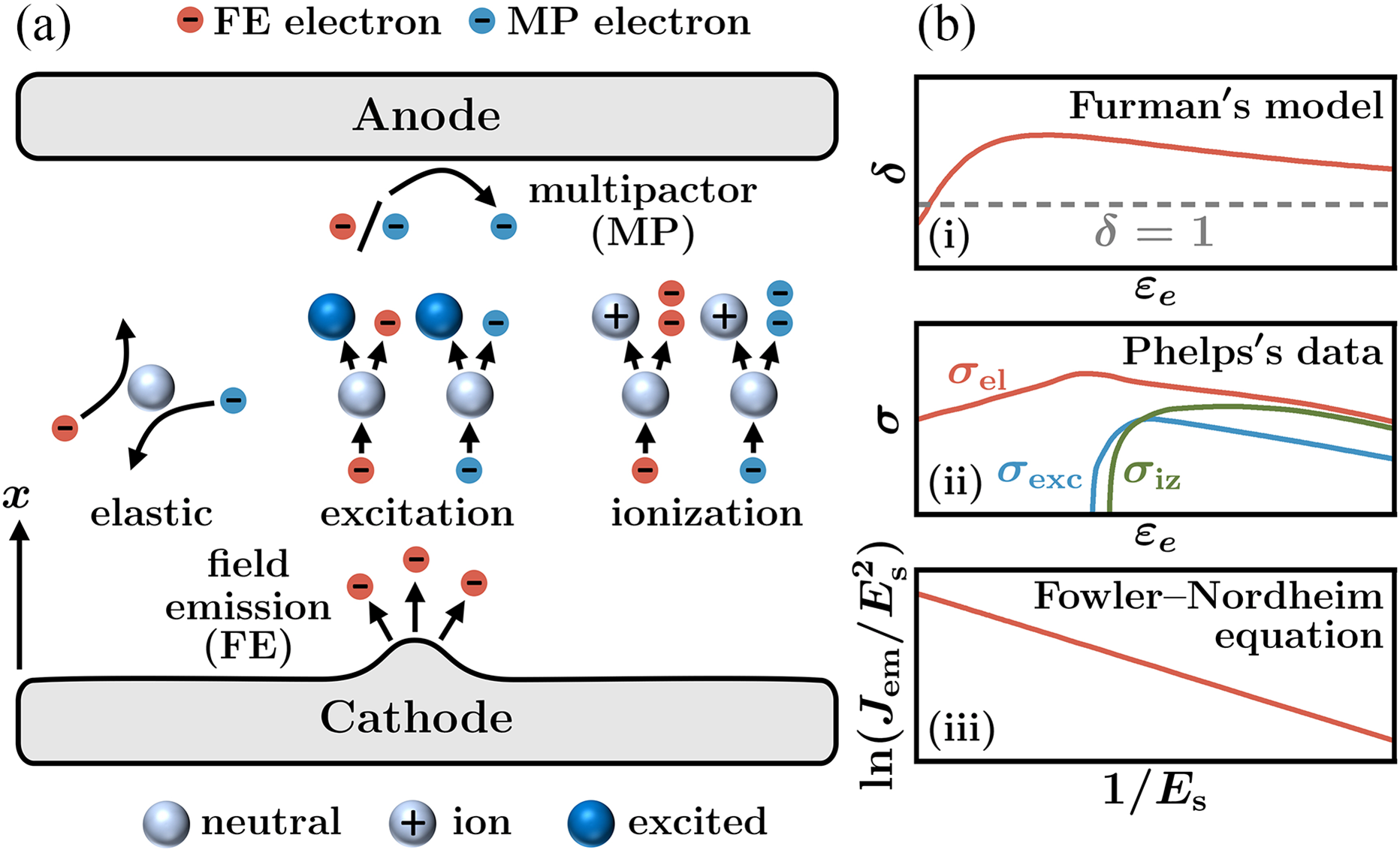
Figure 1. Schematic of Microdischarge Physical Processes
Figure 2 shows a clear “electron hole” structure in electron phase space, a typical feature of two-stream instability. The team conducted test-particle trajectory calculations, showing that low-energy electrons can be trapped by the wave potential and confined within electron holes, exhibiting complex oscillatory trajectories. This trapping effect significantly increases the effective path length of electrons within the gap, far exceeding their mean free path. This study breaks the traditional understanding of micro-gap discharges, demonstrating that even in microplasma systems where the gap distance is comparable to the mean free path, strong electron collisional ionization still exists and profoundly affects terahertz wave excitation.
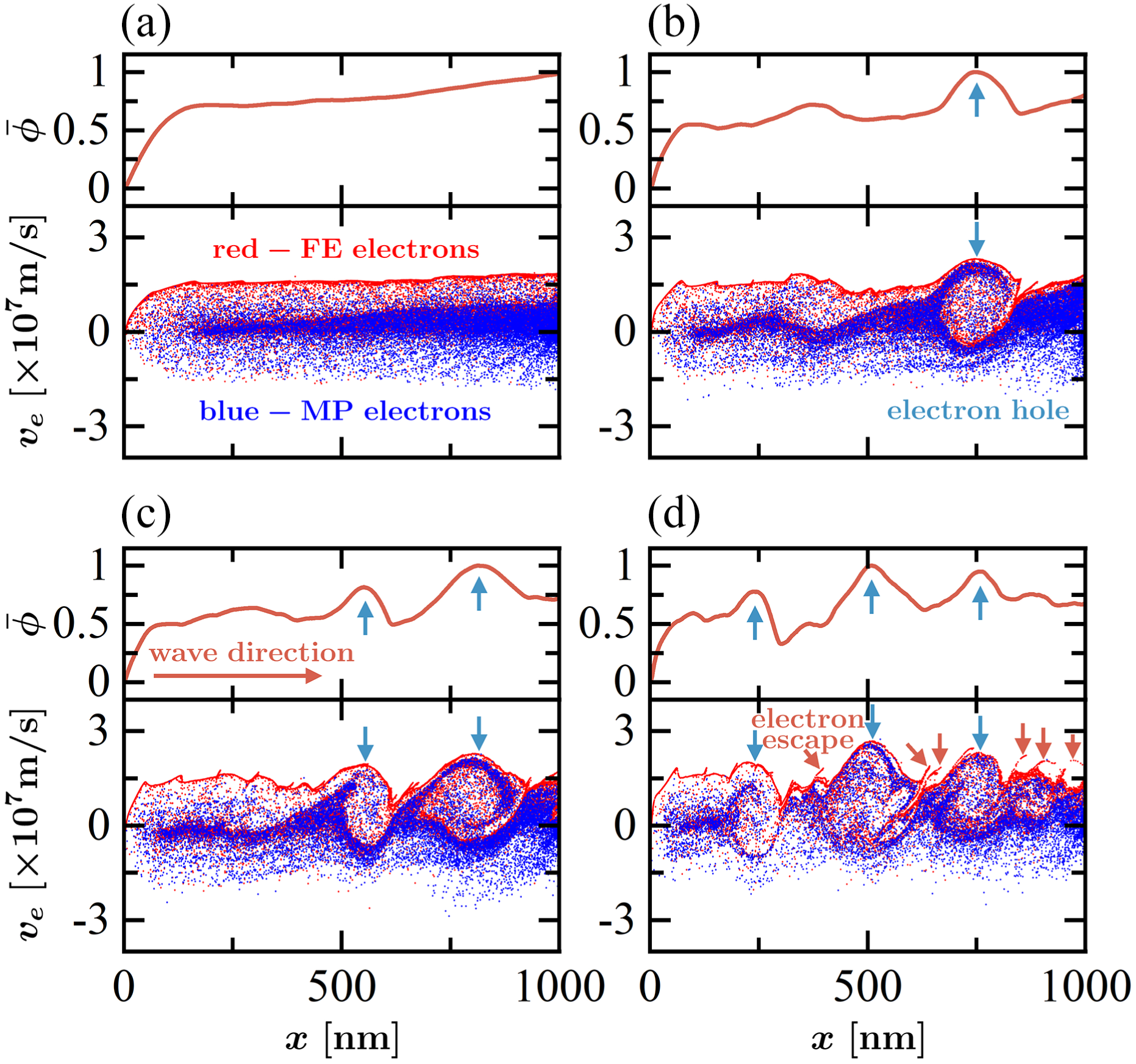
Figure 2. Temporal Evolution of Electron Holes in Phase Space
Based on perturbation theory and normal mode analysis, the team further derived a generalized dispersion relation incorporating collisions, ionization, and thermal effects, identifying high-energy field-emitted electrons as the key driver of two-stream instability. This research confirms the great potential of microplasma for generating ultrafast terahertz signals, opening new technological pathways for the development of miniaturized, chip-scale high-power terahertz devices.
The results were published in Physical Review Letters (PRL) under the title Field-Emission-Induced Terahertz Plasma Waves and Instabilities in Microdischarges. The first author is Chen Jiandong (PhD student, Class of 2022), and the corresponding author is Associate Professor Fu Yangyang. During the research, the group engaged in valuable discussions with leading experts in the field, including Professor Ian Hutchinson from MIT. This work was supported by the Ministry of Education’s Basic and Interdisciplinary Breakthrough Program, the Organized Research Program of the Department of Electrical Engineering at Tsinghua University, the National Natural Science Foundation of China, and the Beijing Natural Science Foundation.
Corresponding Author Profile:
Fu Yangyang is a Special Researcher, Associate Professor, and PhD Supervisor in the Department of Electrical Engineering and Applied Electronics, Deputy Director of the Institute of High Voltage and Insulation Technology, and Director of the Gas Discharge and Plasma Laboratory. His research focuses on gas discharge and plasma, including micro-gap discharge and microplasma, discharge similarity and scaling laws, low-pressure RF discharge, high-pressure pulsed discharge, and laser-sustained plasma. He serves as editorial board member or associate editor for journals including High Voltage, Pulsed Power, Plasma Science and Technology, IEEE Transactions on Plasma Science, and Frontiers in Physics. He is a Senior Member of IEEE, a Senior Member of the China Electrotechnical Society, a member of the Plasma Committee of the China Electrotechnical Society, a council member of the Pulsed Power Technology and Applications Division of the Chinese Nuclear Society, and a young committee member of the Electrostatics Committee of the Chinese Physical Society. He has been selected for the National Overseas High-Level Talent Introduction Program (Young Talent Project). As principal investigator, he has led more than 20 research projects, including the National Natural Science Foundation Original Exploration Program, General Program, Tsinghua University Independent Innovation Projects, Organized Research Projects of the Department of Electrical Engineering, and industry-sponsored projects. He has received honors such as the Ministry of Education Outstanding Scientific Research Achievement Award (Higher Education Institutions), Best Paper Award at IEEE ICOPS, IEEE Nuclear and Plasma Sciences Society Early Achievement Award, and the Asia-Pacific Physical Societies Association Young Scientist Award (U40). He has served multiple times as session chair at international conferences such as IEEE ICOPS, IEEE PPPS, and APS GEC. He has published over 100 SCI journal papers and more than 100 conference papers and abstracts in leading journals such as PRL, PRE, PRApplied, and APL, and holds one U.S. patent as the first inventor. He has delivered 2 plenary talks and more than 40 keynote and invited talks at international academic conferences. His students have won Best Paper Awards at international conferences (IEEE ICOPS, IEEE PPPS, ICPSA) and honors such as the Cai Shidong Outstanding Doctoral Dissertation Award in Plasma Physics.
Paper Link:
J. Chen, C. Lin, P. Zhang, J. P. Verboncoeur, L. K. Ang, and Y. Fu*, “Field-emission-induced terahertz plasma waves and instabilities in microdischarges”, Physical Review Letters 136, 075001 (2026)
DOI: 10.1103/mlrj-9s8s
https://journals.aps.org/prl/abstract/10.1103/mlrj-9s8s


















 News & Events